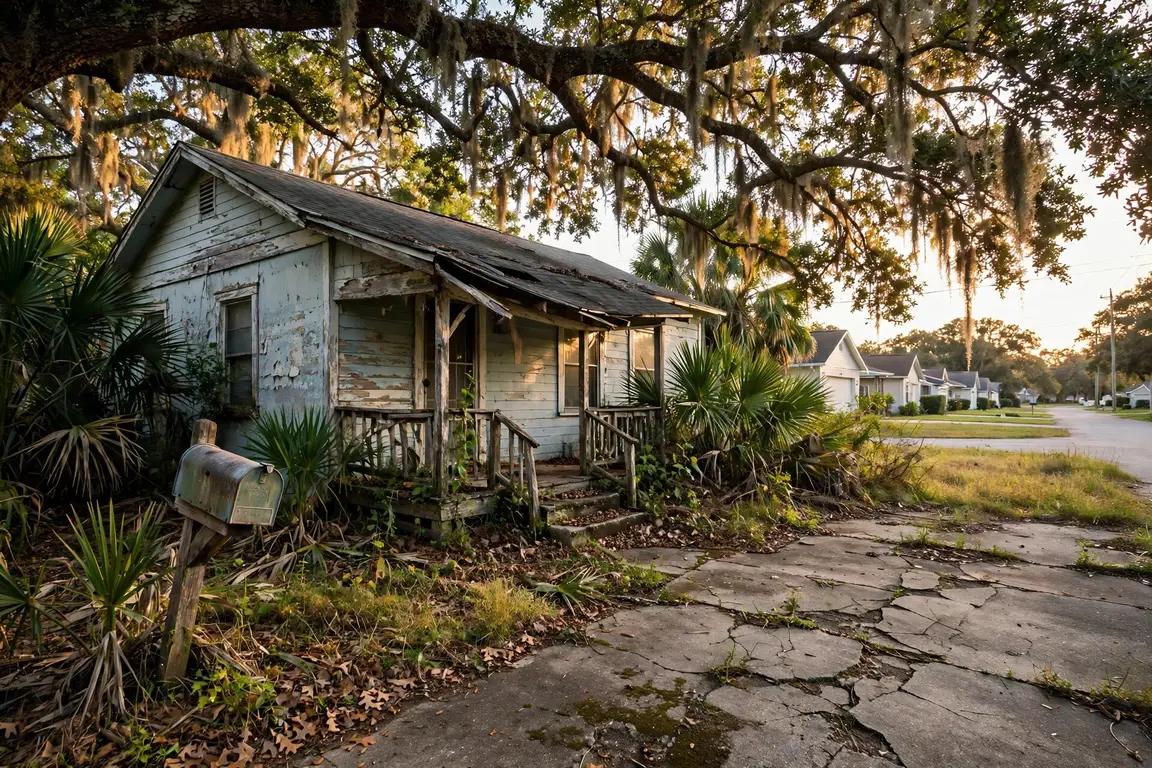

Type your address into Opendoor and an algorithm hands you a number inside a day or two. Call me and a person who has bought houses in Jacksonville for over ten years walks through your actual house and hands you a number. Those are genuinely different products, and which one serves you depends on the house you have and the problem you are solving.
I am Jesse Wyatt, owner of Synergy Redevelopers, LLC. I am the local buyer in this comparison, so I have a dog in this fight, and you should read me with that in mind. What I can promise is that every number I put on Opendoor below is sourced, and where their model honestly beats mine, I will say so. Sellers who get both numbers and compare them properly almost always make a better decision than sellers who take the first one.
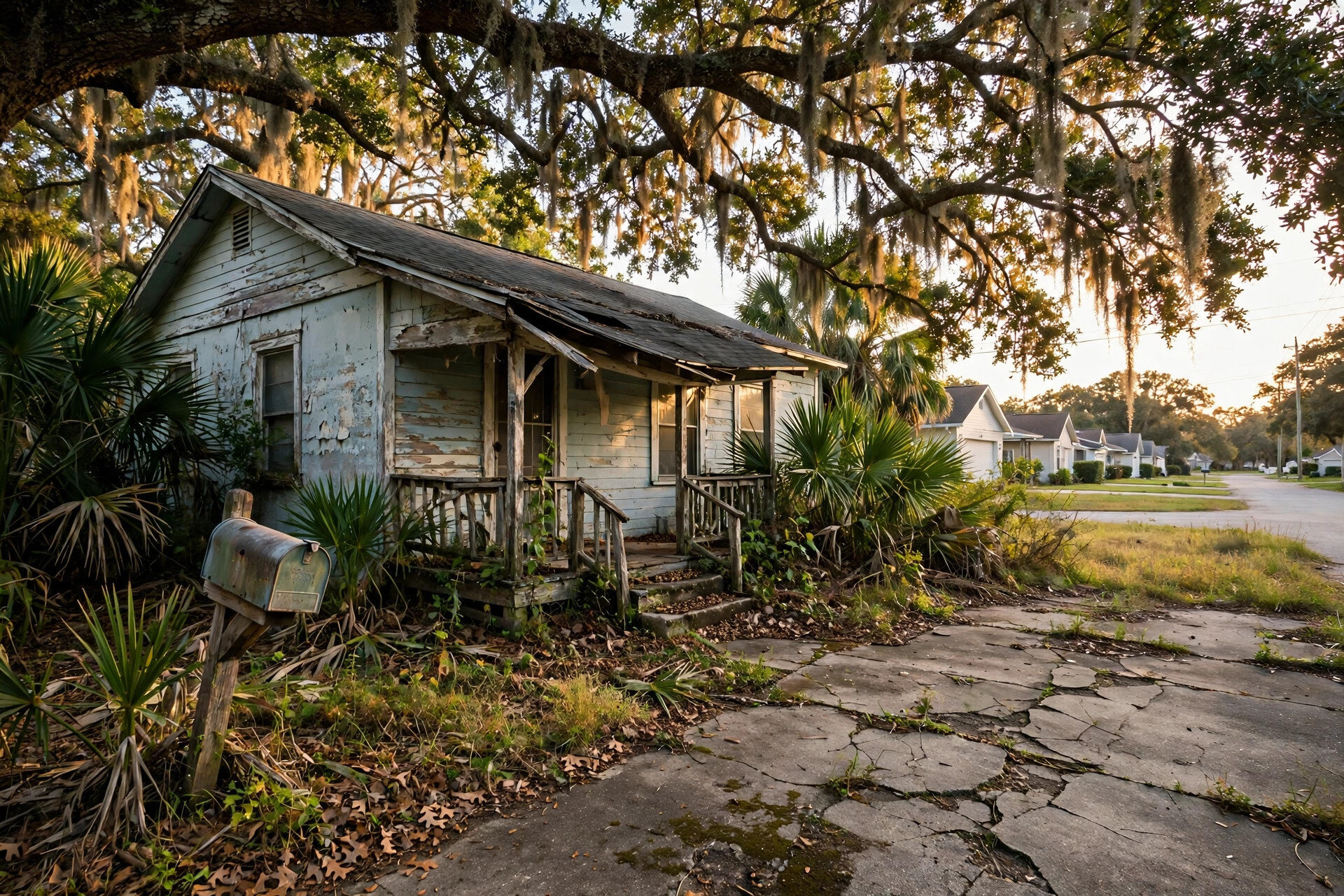
How an Opendoor sale actually runs
Opendoor is what the industry calls an iBuyer. It buys houses directly for cash with an automated pricing model, does whatever work it decides the house needs, and resells the house on the open market. There is no listing, no showings, and no buyer financing to fall through.
The process runs in stages. You enter your address and details about the home, and a preliminary offer usually lands within 24 to 48 hours. If you sign, Opendoor assesses the house in person or virtually. Then comes the step sellers do not always expect: a final offer, with estimated repair costs deducted from the first number. If you accept the final number, you pick a closing date roughly two weeks to two months out, and Opendoor pays you at closing, minus its charges.
Two features of that process matter more than everything else combined. The first number is not the number. And you can walk away any time before closing, which means there is no risk in getting their number… only in failing to compare it.
What Opendoor charges, line by line
The service charge. Opendoor’s own financial filings describe a 5 percent service fee, and current seller guides put it at about 5 percent of the sale price on most offers, varying some by home and market. On a $300,000 sale that is roughly $15,000, and it is not negotiable. It is the price of the convenience, charged like a commission but paid to the buyer.
The repair deduction. After the assessment, Opendoor subtracts what it estimates your house needs: roof age, HVAC, cosmetic wear, whatever its inspector flags. This is the condition adjustment, and it comes off the offer on top of the service charge. A house that shows its age can watch the final number land well below the preliminary one.
Standard closing costs. Title, escrow, and transfer costs still apply, generally another 1 to 3 percent paid to third parties, much like any sale.
The spread. An independent analysis of 409 Opendoor transactions published in February 2026 found its offers averaged about 9 percent below what the homes later resold for. That gap is the business model: buy at a discount, hold, resell. To be fair, every cash buyer, including me, buys at some discount. The question is never whether there is a spread. It is how big yours is, and whether the service you got was worth it.
The FTC chapter, stated fairly
In August 2022, Opendoor settled with the Federal Trade Commission for $62 million. The FTC said Opendoor’s marketing between 2017 and 2019 claimed sellers would come out ahead versus a traditional sale, when in practice offers were often below market value and the fees and repair deductions reduced what sellers actually received. Refunds went out to 54,689 sellers in April 2024. Opendoor did not admit wrongdoing, and the claims it got in trouble for are claims it no longer makes.
I include this because sellers deserve the whole picture, not because it disqualifies them. It does not. Opendoor is a real company that closes what it contracts. What the settlement teaches is simpler: never trust any buyer’s marketing math, including mine. Trust the final number on the page in front of you, compared against your other real options.
Where Opendoor honestly wins
If your house is a newer home in a tract subdivision, in good shape, with dozens of similar sales on nearby streets, their model is built for you. It prices off a deep stack of comparable sales, the repair deduction stays small because there is little to deduct, and you get speed and certainty with almost no human involvement. Some sellers genuinely prefer never talking to anyone, and for them the algorithm is a feature, not a bug.
On a clean house like that, their final net can beat a local investor’s number, mine included. I will tell a seller that to their face when it is true, because the deal I want is the house that actually fits me.
Where the algorithm cannot go
The model needs sameness. It needs many similar houses, recent sales, and a property it can price from a desk. Jacksonville is full of houses that are none of those things, and those are the houses I buy.
Houses with real damage. Fire, mold, storm water, a failed roof, a foundation issue. The deduction math gets punitive or the offer never comes at all. A local buyer walks it, prices the actual work with his own contractor numbers, and buys it as it sits. Here is how that plays out with a mold house, to take one example.
Probate and inherited houses. An estate sale can involve a court timeline, several heirs, a title that needs untangling, and a house full of forty years of belongings. An algorithm has no box for any of that. I work through it with the family and my probate attorney, and the house can sell with the belongings in it. More on how a probate sale runs.
Tenant-occupied and problem properties. Occupied rentals, squatters, code violations, liens, a mortgage behind on payments. Each one is a problem to solve before or during the sale, and solving problems is a human service.
Unique and older homes. Much of Jacksonville’s housing stock is older, added onto, converted, or simply unlike anything else on the street. Thin comparable sales mean a cautious model or no offer. A local buyer prices the street he knows, not the spreadsheet average.
Sellers who need terms, not just speed. Sometimes the right answer is not the fastest close. It is a later date, time to stay after closing, a creative structure like seller financing, or help sequencing a move. Those are negotiated between people.
The Zillow chapter: the biggest iBuyer already quit
People still ask me how Opendoor compares to Zillow, so here is the short answer: Zillow does not buy houses anymore.
Zillow Offers launched in 2018 with the best data in the industry and the Zestimate behind it. In November 2021, Zillow shut the whole program down. The company wrote down $304 million on homes it had bought for more than it could sell them for, expected another $240 to $265 million in write-downs behind that, and cut about 2,000 jobs, a quarter of its workforce. Its own CEO said the unpredictability in forecasting home prices far exceeded what they had anticipated.
That is the algorithm problem, stated by the company that had the most data and the most money. Pricing a specific house, on a specific street, with its specific roof and title history, is not a problem a model solves from a distance.
And the footnote matters for Jacksonville sellers: when you request a cash offer through Zillow today, you are routed to Opendoor. There is no second national quote behind that door. It is the same company, wearing a familiar name.
How a local cash sale compares, line by line
A local buyer like me runs on a different cost structure, and you should hold it to the same light.
There is no service charge. My offer is my offer, and the number I give you after walking the house is the number on the contract, not a preliminary figure waiting on a second inspection to shrink it. I buy as-is in the plain sense of the term, which you can read more about here.
Closing costs exist on my side too, although on many of my purchases I cover the standard seller closing costs as part of the deal. That gets settled in writing before you sign anything, and the full walkthrough of my process is here.
My discount is real, same as theirs. I buy below what the house will be worth fixed up, because the fixing, holding, and reselling risk is mine after closing. On a house needing serious work, my all-in number regularly beats the algorithm’s final number, because I deduct the true cost of the work instead of a model’s cautious estimate of it, and I charge no fee on top. On a clean newer house, the math can run the other way, as I said above.
The other difference is who answers for the deal. When something surfaces mid-transaction, a lien nobody knew about, a heir who needs to sign from another state, a closing that has to move a week, you are calling a person who knows your file. With the platform, you are calling a support queue. Neither is automatically better. They are different, and for a complicated sale the difference is the whole ballgame.
The right way to use both of us
Get both numbers. That is the entire strategy, and it costs you nothing but a few days.
Take the Opendoor offer all the way to the final number, the one after the assessment and the repair deduction, because that is the real offer. Then get a local buyer’s number in writing, with closing costs stated. Compare the two nets, side by side, along with the closing date and what each buyer is asking of you between contract and closing. If the platform wins on your house, take it with my blessing. If your house has a problem in it, the odds are strong the local number wins, and you will have the paperwork to prove it either way.
The bottom line
Opendoor is a good tool for a narrow job: a newer, clean, easy to price house where you value a hands-off process. A local cash buyer is the tool for everything the model cannot price: damage, probate, tenants, tangled title, and houses that are simply one of one. Most Jacksonville sellers who call me are holding the second kind. Whichever kind you are holding, compare final numbers, not first numbers, and make the buyers compete for your house instead of the other way around.