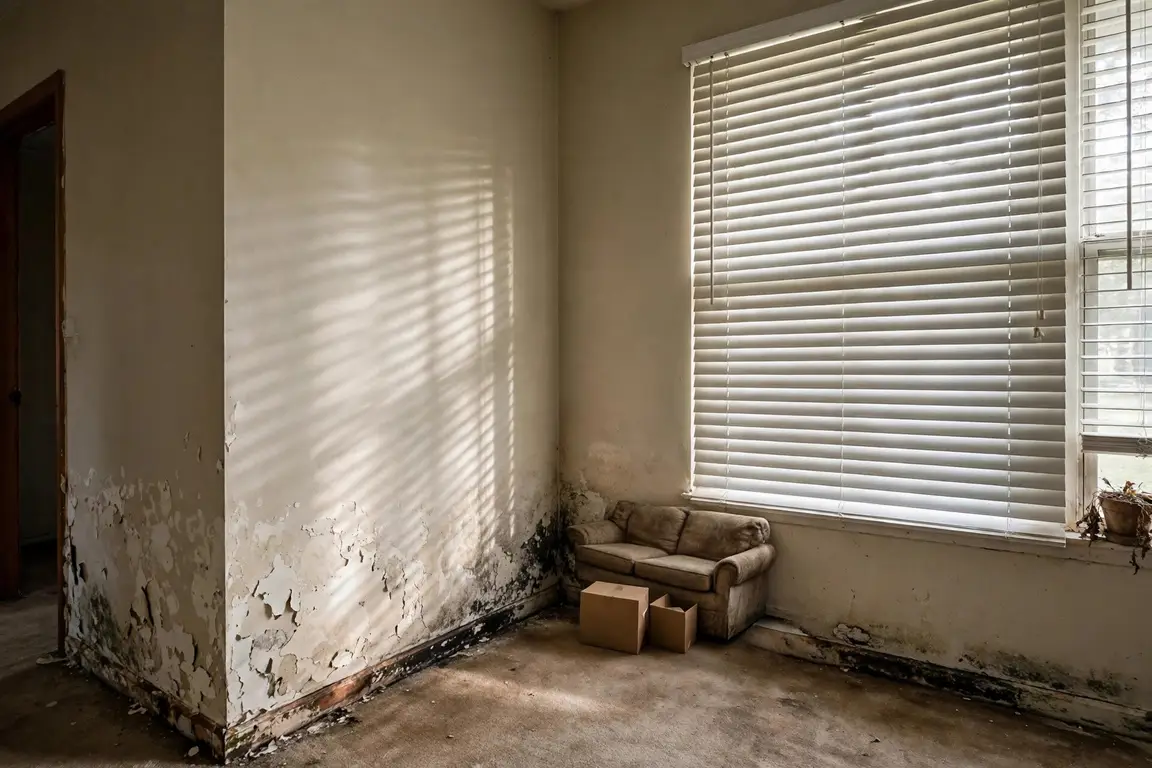

Mold is the most Florida problem a house can have. This is a city where the air itself is wet half the year, where a roof leak left alone for one summer can bloom across a ceiling, and where a vacant house with the air conditioning off can grow a colony in the closets before the grass gets cut twice. I buy houses in Jacksonville and across Northeast Florida, and mold comes up on my calls every single month. Almost every seller says the same two things: a remediation quote scared them into doing nothing, and a real estate agent told them the house cannot be sold until it is fixed.
Both of those can be true at once, and neither one means the house is unsellable. It means the traditional route is closed. This page lays out what mold actually does to a sale, what fixing it really costs, what Florida law requires you to disclose, and the route that skips the fix entirely.
How mold gets into a Jacksonville house
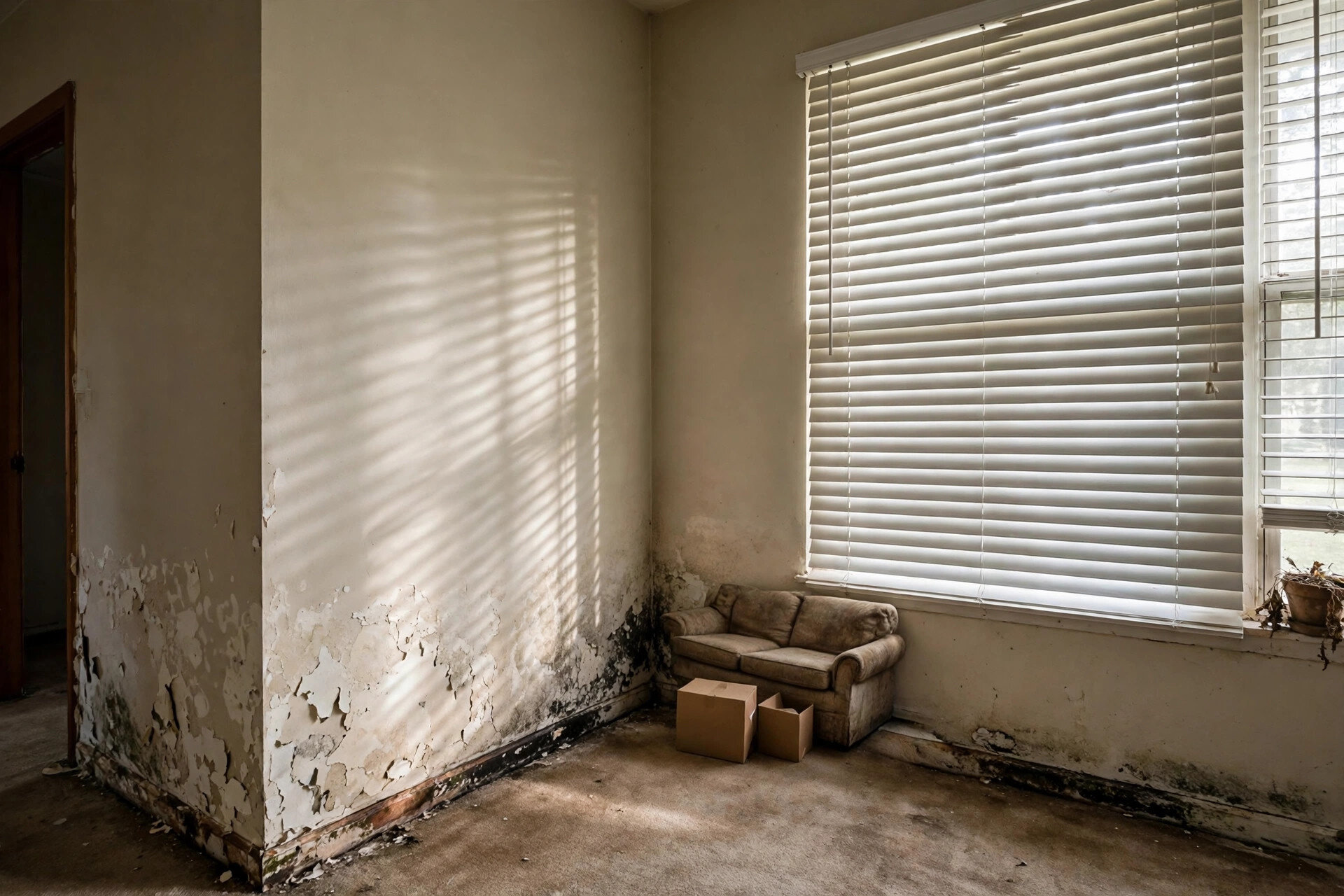
Mold needs two things: moisture and time. Jacksonville supplies both generously. The common sources I see are a roof leak that drips into the attic or a wall cavity, a slow plumbing leak under a sink or behind a shower, flood or storm water that got in once and never fully dried, and the quiet one, a vacant or inherited house sitting with the power off. Without air conditioning moving dry air, indoor humidity here climbs past the point where mold takes hold on drywall, and it grows undisturbed because nobody is walking through the rooms.
The visible patch is rarely the whole story. Mold spreads inside wall cavities and under flooring where it cannot be seen, which is why a small stain on a ceiling sometimes opens up into a much bigger job once a contractor starts cutting. That uncertainty drives everything else in this article: the cost, the buyer fear, and the discount.
What mold does to a traditional sale
A house with visible mold can be listed. The problem is what happens after the listing. Most retail buyers need a mortgage, and a mortgage needs an appraisal and usually insurance. Appraisers flag visible mold and water damage, lenders can require remediation before they fund the loan, and Florida insurance carriers are already cautious about water claims. A buyer who loves the house can still lose the deal in underwriting through no fault of their own.
Then there is the inspection. A buyer’s inspector will find the mold, test or recommend testing, and the deal enters renegotiation: remediate it, credit the cost, or the buyer walks. Sellers who cannot afford the fix watch the contract die and start over with the next buyer, who finds the same mold. Meanwhile the disclosure form follows the house, so the problem is on paper for every buyer after the first one. I see the same pattern in other heavy-condition sales, and it is why I wrote about selling a distressed property as its own category: once condition blocks financing, the buyer pool shrinks to people who can pay cash and absorb repairs, and the seller’s job changes from marketing the house to finding that pool.
What remediation really costs
Professional remediation is priced by the size of the affected area and how much material has to come out. As a planning range, not a quote: a small, contained job, a bathroom or a closet, often runs from several hundred dollars to around $2,000. A mid-size job across a room or two commonly lands between $3,000 and $10,000. A severe case, mold through multiple rooms, inside walls, or into the HVAC system, can run $10,000 to $30,000 or more once demolition, treatment, clearance testing, and rebuilding the torn-out drywall and flooring are all counted.
Two costs hide underneath those numbers. First, remediation only treats the growth. If the roof leak, the plumbing leak, or the failed drainage that fed it is not repaired, the mold returns, so the source repair is a second bill on top of the first. Second, homeowners insurance in Florida usually caps mold coverage, often at a limit well below a large remediation bill, and a claim can affect the policy going forward. Add it up honestly and a seller can be looking at five figures out of pocket before the house is even ready to show, with no guarantee the retail sale survives underwriting afterward. That math is the real reason so many mold houses sit.
Your disclosure duties in Florida
This part is not optional, and it applies to cash sales too. Florida law follows the rule from the Johnson v. Davis case: a seller must disclose known facts that materially affect the value of the property and are not readily observable to the buyer. Known mold is exactly that kind of fact. If you know it is there, or you had it tested, or a contractor quoted remediation, that knowledge has to be disclosed to the buyer, even in an as-is sale. As-is describes the condition you are selling in; it does not erase the duty to tell what you know.
Two practical points. Painting over mold does not make it unknown, and it can turn a disclosure problem into a fraud problem if the buyer proves the cover-up later. And a buyer who discovers undisclosed mold after closing has legal remedies that cost far more than the honesty would have. When I evaluate a mold house, I ask about it directly and I expect a straight answer, because my offer is built on the real condition. A seller who discloses fully and sells as-is is protected in a way a seller who hides the problem never is. This is general information about how Florida disclosure works, not legal advice about your specific situation; a Florida real estate attorney can answer questions about your own facts.
Why buyers discount harder than the repair bill
Sellers often assume the discount on a mold house should equal the remediation quote. Buyers do not price it that way, and it helps to see their side. The quote covers the mold that was found. The buyer is pricing the mold that might be found after the walls open, plus the source repair, plus the risk that insurance or a future resale gets complicated, plus the simple fact that mold frightens retail buyers and their families in a way a dated kitchen does not. Stigma is a real cost in this category.
That is also why offers on mold houses vary so widely. A buyer guessing at the scope pads the guess. A buyer who has remediated Florida houses before prices the actual work, the actual risk, and a fair margin, and the number lands higher and firmer. The fix is not to hide the problem. The fix is to sell to someone who has seen it before, with the condition on the table.
The cost of waiting
Mold is one of the few house problems that bills you monthly for ignoring it. While a seller gathers quotes, a slow leak keeps feeding the colony and the affected area grows, which grows the remediation scope and the discount every buyer applies. The house itself keeps charging rent in the meantime: taxes, insurance, a mortgage payment if one exists, and utility minimums, all on a property that cannot be sold the normal way until the decision gets made. I have walked the same Jacksonville house twice, once in the spring and once after a summer of waiting, and the second walkthrough is a different and worse house. None of that argues for panic. It argues for making the comparison with real numbers now, remediation quote on one side and an as-is offer on the other, while the problem is the size it is today.
The as-is cash route
Here is how a mold house sale works with me. You do not remediate. You do not repaint, tear out drywall, or hire a testing company to make the house presentable for my visit. I walk the house, I look at the mold myself, and I price the remediation, the source repair, and the risk into my offer. The disclosure conversation happens up front and in writing, which protects you. There is no lender, so there is no appraisal or underwriting step for the mold to kill. No showings, no inspection renegotiation, no contract dying in week five.
The same shape covers the houses where mold started: the vacant place that sat with the power off is exactly the situation in my guide to selling a vacant house in Jacksonville, and a mold house with other heavy repairs fits the pattern in my breakdown of selling a house as-is with no repairs. One buyer, one offer built on the real condition, and a closing date picked with you, in as little as 7 days when the title is clear. Synergy Redevelopers, LLC is the buyer named in the contract, and my own funds close the deal.
What to do this week, whichever route you pick
Stop the water first if you safely can. Mold with a live leak behind it keeps growing, and every route, remediation or as-is sale, prices a growing problem worse than a stable one. Do not paint over it, and do not rip out moldy drywall yourself; disturbing it without containment spreads spores through the house and through your lungs. If you want a number for the traditional route, get one written remediation quote from a licensed Florida mold remediator so the decision is based on a figure instead of a fear. Then compare that figure, plus the source repair, plus the months of carrying the house, against an as-is offer with the work already priced in. Whichever wins on real numbers is the right call.
If you are holding a mold house in Jacksonville or anywhere in Northeast Florida and want that comparison, call me at (904) 867-8673. I will walk the house, tell you plainly what the mold does to my number and why, and you can weigh it against a remediation quote with both figures in front of you. Start with my main guide to selling a house fast in Jacksonville if you want the full picture of how I work first.
Questions sellers ask me about mold
Can you sell a house with mold in Florida? Yes. There is no Florida law that bars selling a house with mold. What the law requires is disclosure of known mold to the buyer. The practical barrier is financing: most mortgage buyers cannot close on a house with visible mold, which is why these houses usually sell to cash buyers as-is.
Do I have to disclose mold if I sell as-is? Yes. As-is changes who pays for the condition, not what you have to reveal. Under Florida’s Johnson v. Davis rule, known facts that materially affect value and are not readily observable must be disclosed. Known mold qualifies. Disclose it in writing and keep a copy.
How much does mold remediation cost in Jacksonville? It depends on scope. Small contained jobs often run from several hundred dollars to about $2,000. Multi-room jobs commonly land between $3,000 and $10,000. Severe cases with demolition, HVAC involvement, and rebuilding can exceed $10,000 to $30,000. The repair of the moisture source is a separate cost, and it is the one that decides whether the mold stays gone.
Will insurance pay for the remediation? Sometimes, up to a limit. Florida homeowners policies commonly cap mold coverage, and the cap is often well below a major remediation bill. Whether a specific claim is covered depends on what caused the mold and the terms of the policy. Check the policy before counting on it.
Should I get a mold test before selling? If you are listing traditionally, a test and a remediation plan can keep a deal alive. If you are selling as-is to a cash buyer, it is usually unnecessary spending: I price the visible condition and the scope risk into the offer, and your disclosure of what you already know is what matters legally.
Can mold come back after remediation? Yes, if the moisture source is not fixed. Remediation removes the growth. A roof leak, plumbing leak, or drainage problem that stays in place will feed new growth, which is why honest quotes always pair remediation with the source repair.