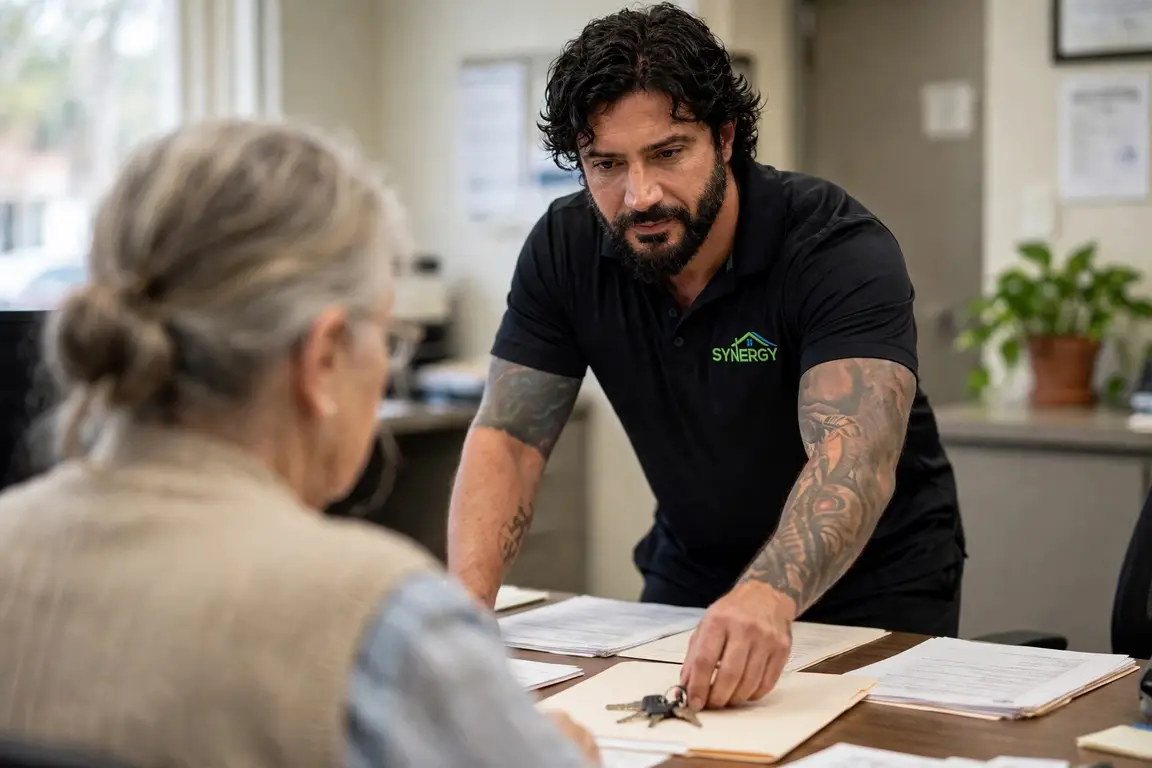

Some of the cleanest sales I close never touch the MLS. No sign in the yard. No listing photos, no showings, no strangers walking through the bedrooms on a Saturday. The seller already knows who they want to sell to, and the whole deal runs on a contract, a title company, and a deed.
That is a private sale, and in Florida it is completely ordinary. The MLS is a marketing system, not a legal requirement. What the law does require is paperwork done right, and that is where private sales earn their reputation for going sideways. The marketing is the easy part to skip. The paperwork is not.
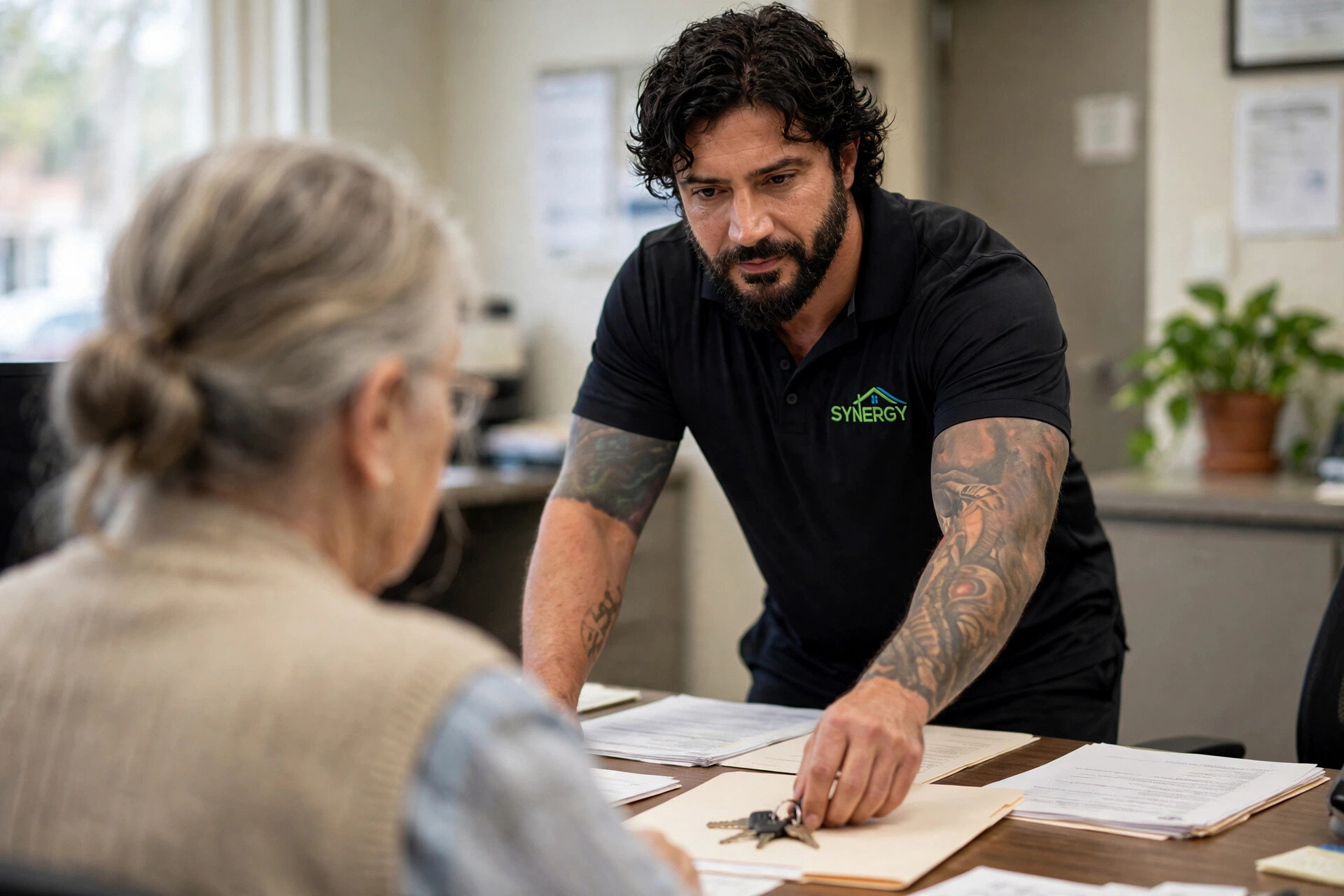
I am Jesse Wyatt, owner of Synergy Redevelopers, LLC in Jacksonville. I buy houses directly from sellers all over Florida, so a large share of my closings are private sales by definition. Here is how one actually runs, what it costs, and the places I have watched them break. Quick note: I am not a lawyer, and this is not legal advice. It is the view from the buyer’s side of a lot of Florida closing tables.
The three shapes a private sale takes
You sell to someone you already know. A tenant who wants to buy the rental. A neighbor who has asked about the house for years. A family member. This is the most common private sale I see, and the most relaxed, which is both its appeal and its risk. Familiarity makes people skip steps they would never skip with a stranger.
You sell it yourself to the public. The classic for sale by owner. You handle the marketing the MLS would have done: the price, the calls, the showings, the negotiation. You keep the control and the work.
You sell directly to a cash buyer. A buyer like me makes an offer, you skip the marketing entirely, and the sale runs privately from first call to closing. This is the shape most readers here end up in, because the usual reason to skip the MLS is that the house or the timeline does not fit the public market.
All three land in the same place: a written contract and a closing at a title company.
Step 1: price it like someone who has to defend the number
Without an agent, the pricing homework is yours, and it is the step private sellers most often get wrong in both directions. A neighbor’s opinion and an online estimate are not pricing. The online estimates price your house as if it were the renovated one two streets over.
What holds up: recent sold prices for similar houses near yours, adjusted honestly for condition, plus a clear eyed look at what your house needs. The county property appraiser’s site gives you the sales history on your parcel for free. If the number really matters, and it usually does, paying for an appraisal or a broker’s price opinion is cheap insurance against leaving real money behind or pricing so high the sale dies quietly.
In a sale to family, this step matters more, not less. A price nobody can defend is the thing relatives argue about at holidays for a decade.
Step 2: get the agreement in writing, on a real contract
Florida law is blunt on this point: an oral agreement to transfer real estate is unenforceable. A handshake deal on a house is a story, not a sale. Every private sale needs a written contract signed by both sides.
Most private sellers in Florida use the standard Florida Realtors and Florida Bar contract forms, the same ones agents use, or have an attorney draw one up. Either beats a generic internet form, because the Florida forms already carry the state specific pieces: the radon gas notice, the flood disclosure a seller gives at or before signing, and the lead based paint paperwork for houses built before 1978.
The contract needs, at minimum: the legal description of the property (not just the street address), the price, the earnest money amount and who holds it, the closing date, what is included in the sale, and how condition is handled, including whether the sale is as-is. I wrote up the as-is side of that in my piece on selling a house as-is in Florida, because as-is means something specific and it is not “the buyer can never complain about anything.”
Step 3: earnest money goes to a neutral holder
The buyer’s deposit should sit with the title company or an attorney, in escrow, never handed to the seller personally and never skipped because the two sides feel friendly. It is what makes the contract real for both sides: the buyer has something to lose by walking away, and the seller has proof the buyer is serious.
Step 4: the disclosures are still yours, agent or no agent
Skipping the MLS does not skip your duties as a seller. Under a 1985 Florida Supreme Court case, Johnson v. Davis, a home seller in Florida has to disclose facts they know about that materially affect the value of the property, are not readily observable, and are not known to the buyer. A roof that leaks into a closet ceiling you painted over. The flooding in the back room in 2021. The addition nobody pulled a permit for. If you know it, it matters to value, and the buyer cannot see it on a walkthrough, it belongs in the open.
Two things worth knowing. First, an as-is contract does not erase that duty. As-is limits what you have to fix. It does not license hiding what you know. Second, disclosure protects you as much as the buyer. A problem disclosed in writing before closing is a problem the buyer accepted. A problem found after closing, that you knew about, is the start of a lawsuit.
Step 5: close at a title company, even if the buyer is your cousin
A private sale still needs a title search, a proper deed, and a closing run by a title company or a real estate attorney. Here is what that closing does for a seller:
The title search checks the public record for liens, old mortgages that were paid but never formally satisfied, judgments, and tax issues. Buyers who skip the search are buying those problems along with the house, and sellers who skip it sometimes learn at the worst moment that they could not have conveyed clean title anyway.
The deed has to meet Florida’s execution rules. It must be signed in the presence of two witnesses who also sign, and acknowledged before a notary for the clerk to record it. Get one of those wrong and the clerk can reject the deed or, worse, the deed gets challenged later. This is also why deed shortcuts worry me. I covered what a quitclaim deed does and does not do in my piece on selling a house with a quitclaim deed; family transfers done on a downloaded form are where I see the most quiet title damage.
The money moves through escrow. The title company collects the buyer’s funds, pays off your mortgage and liens from the proceeds, and wires you the balance.
On costs: Florida charges a documentary stamp tax on the deed of $0.70 for every $100 of the sale price, so $2,100 on a $300,000 sale, and it is customarily the seller’s cost in most of Florida. The seller also customarily pays for the owner’s title insurance policy. Everything is set by what the contract says, and local custom varies (Miami-Dade does its own thing on the tax rate), but those are the line items to expect. Notice what is missing: a sales commission. That absence is the real arithmetic of a private sale.
Where private sales go wrong
The seller does not actually own the house yet. This is the big one in my world. Mom passed, the family agrees to sell her house privately to a neighbor, and nobody checks the deed, which still sits in Mom’s name. That house cannot be sold until the estate goes through probate and someone has legal authority to sign. It is fixable, it is common, and it stops more private sales than any other single thing. My piece on selling a house while in probate covers how that sequence runs.
Title problems nobody looked for. The search gets skipped because the buyer is a friend of the family and the house “has been in the family forever.” Those are exactly the houses with old estates, old liens, and old boundary questions layered into the record.
A contract that leaves the important things vague. No deposit deadline. No closing date. Nothing about what happens if the buyer cannot perform. Vague contracts are how a friendly sale turns into a dispute neither side can settle on their own.
Money that moved outside of escrow, and deeds that never got recorded. A buyer who gives the seller cash directly, a seller who lets a buyer move in before closing “because we trust each other,” a deed signed at the kitchen table and never taken to the clerk. The moment something breaks down there is no neutral record of anything, and unrecorded deeds surface years later, usually when someone dies or tries to sell again, at a cost well past what the title company would have charged.
Every one of these is avoidable with the same short list: real contract, escrow, title search, proper deed, honest disclosures.
Selling privately to a cash buyer, honestly
When the buyer is a company like mine, the process simplifies and the trade gets clearer. No showings, no listing period, no financing contingency, because there is no lender. The contract is a standard Florida contract, the closing runs through a local title company, and the timeline is usually one to three weeks once title comes back clean. The steps are laid out on my how we buy houses page.
The trade is price. A cash buyer prices in the repairs, the holding costs, and the risk, so the offer sits below what a fixed up listed sale might bring. What you get back is the whole public process deleted: no commission, no repairs, no cleanout if you do not want one, and a closing date picked around your life instead of the market’s. For a house in good shape with a seller who has time, the listed market will usually pay more, and I will tell you that on the phone. For an inherited house full of forty years of belongings, or a house that needs a roof before any lender will touch it, the private route often nets out better once the carrying costs and the months are counted honestly.
One caution that applies to my lane too: get more than one number, insist on a written offer with the earnest money held at the title company, and make any buyer, me included, show you the math.
The short version
You do not need the MLS, an agent, or anyone’s permission to sell your own Florida house. You need a defensible price, a real written contract, the buyer’s deposit in escrow, honest disclosures, a title search, and a deed signed with two witnesses and a notary at a proper closing. Do those things and a private sale is just a sale with the marketing taken out. Skip them, especially the title search and the written contract, and the savings can get expensive fast.
If you are weighing a private sale and want a direct number to compare against, call me at (904) 867-8673 or start at sell my house fast in Jacksonville. One conversation, one walkthrough, one written offer. And if listing is honestly the better move for your situation, you will hear that from me too.
Frequently asked questions
Do I need a real estate license or an agent to sell my own house in Florida? No. An owner can sell their own property without a license and without hiring an agent. The license laws govern people who sell property for others. What you cannot skip is the legal side: the written contract, the disclosures, and a properly executed deed.
Do I need a lawyer for a private sale? Florida does not require an attorney to close a home sale, and title companies handle most residential closings here. An attorney earns their fee when the file is complicated: an estate that has not been probated, owners who do not agree, or a title problem.
What does a private sale cost the seller in Florida? Typically the documentary stamp tax on the deed ($0.70 per $100 of price, so $2,100 on a $300,000 sale), the owner’s title insurance policy, and recording fees, with any mortgage or liens paid off out of the proceeds. There is no sales commission. Who pays which item is set by the contract, so get it in writing either way.
Can I sell a house privately if the owner has died? Not until the legal authority exists. A house titled to someone who has passed has to go through probate before it can be sold, either by the personal representative for the estate or by the heirs after the court puts the property in their names. Conversations and even a written offer can happen while probate runs, but the closing waits on the court’s steps.
Can I sell my house to my tenant or a family member privately? Yes, and it happens all the time. Run it like any other sale: written contract, deposit in escrow, disclosures, title company closing. The ones that go wrong are almost always the ones where the relationship replaced the paperwork.