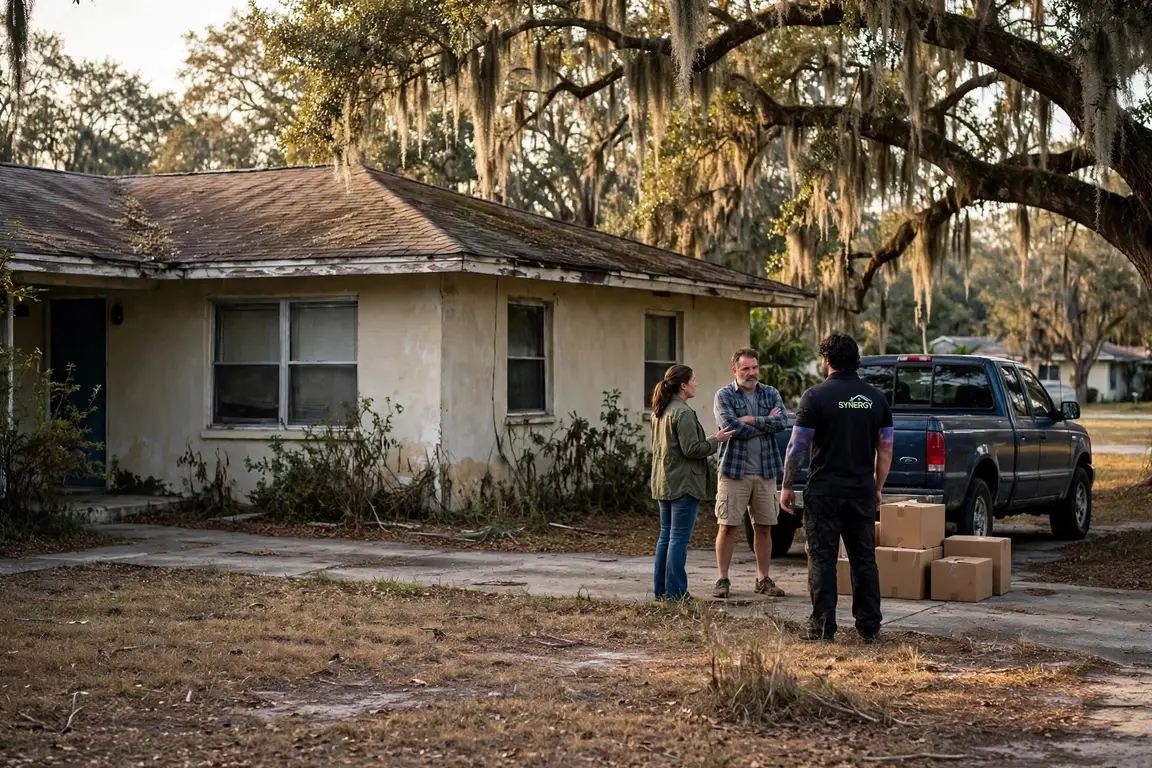

One house. Three owners. Four opinions, because one of the owners is married and the spouse has a vote at the kitchen table even if their name is nowhere on the deed.
That is the shape of most multi-owner inherited sales I get called into here in Northeast Florida. Mom or Dad passes, the will leaves the house to the kids in equal shares, and everybody involved is a decent person. The sale still stalls for a year. Not because anyone is greedy. Because a house owned by three people needs three people to agree on price, timing, repairs, and a closing date, and grief does not make those conversations easier.
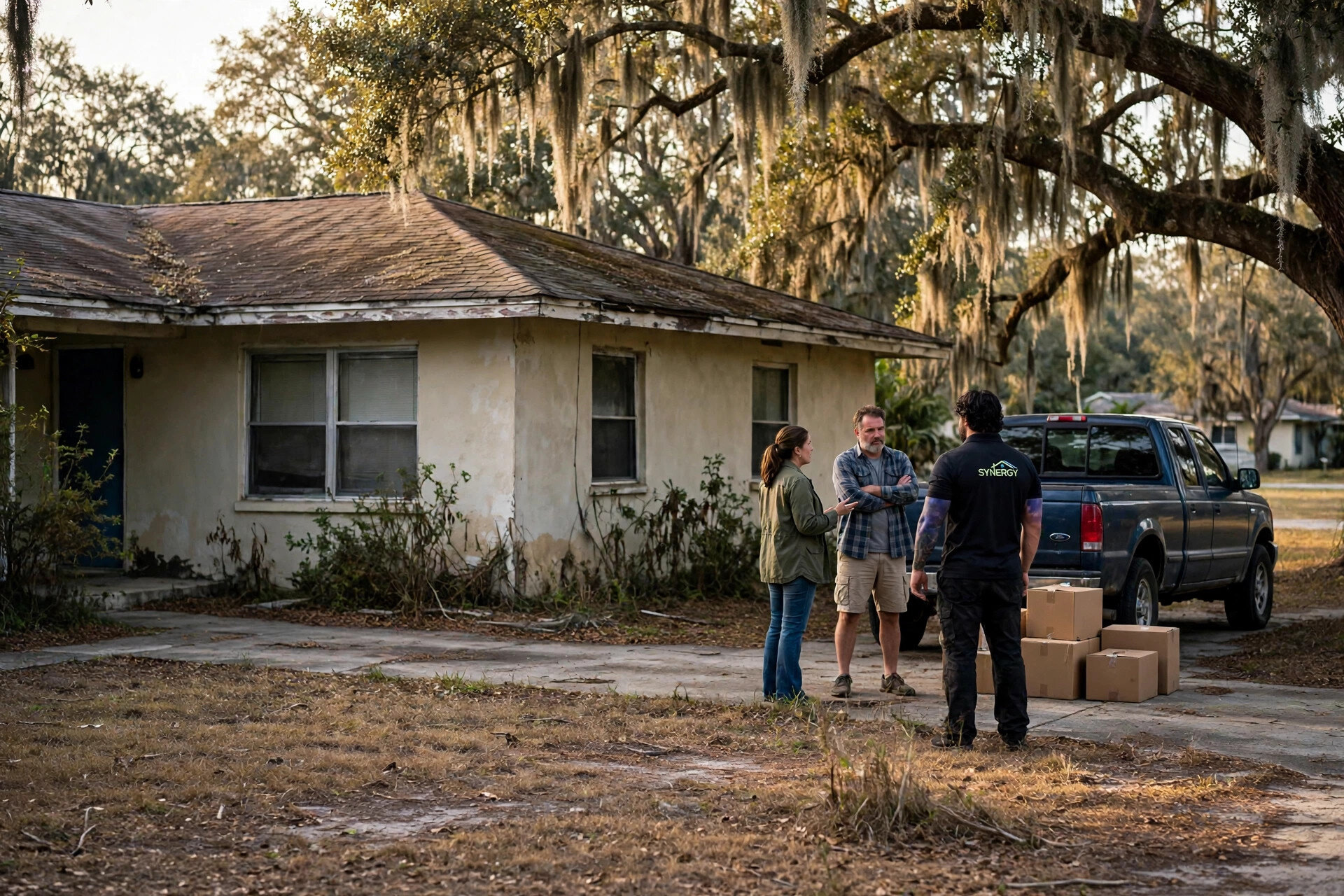
I am Jesse Wyatt, owner of Synergy Redevelopers, LLC in Jacksonville. I buy inherited houses across Florida, and the multi-owner ones follow a pattern regular enough that I can usually name the sticking point in the first phone call. Here is how these sales actually break down, and how the ones that close get unstuck.
What you and your siblings actually own
Start with the ownership itself, because this is where the first misunderstanding lives. When a Florida will leaves a house to three children, or when there is no will and the house passes to the heirs, the usual result is a tenancy in common. Florida law defaults to that form unless the paperwork says otherwise. Each owner holds an undivided share of the whole property.
Undivided is the word that matters. Nobody owns the front half of the house or the side of the lot with the oak tree. Each of you owns a share of every square foot. So no owner can sell the whole house alone, because no owner holds the whole house to sell. Any owner can sell their own share, but a buyer for a one third share of a stranger’s family house is rare, and the price that share fetches reflects it.
Why these sales stall
Nobody is working from the same number. One sibling has a neighbor who sold high in 2022 and anchored there. Another checked an online estimate that priced the house as if the roof were new. A third would take almost anything to be done with it. Until the family is arguing about one real number from someone who has walked through the house, they are arguing about three different houses that exist only in their heads.
One heir is living in the house. This is the stall I see most. A son or daughter moved in with Mom years ago, or moved in after she passed to look after the place, and every sale conversation is also a conversation about where that person goes next. The siblings who want to sell feel like they are evicting family. The sibling in the house hears a deadline instead of a plan. Nothing moves until that person’s housing gets treated as a real part of the deal, with a real timeline, instead of an awkward footnote.
The heirs are scattered. One in Jacksonville, one in Ohio, one who has not been back in six years. The real friction is that the out of state heirs cannot see the house or meet the roof guy, and tend to assume the local sibling is either overpaying for everything or quietly benefiting from the delay. Paperwork crawls too, because every signature round has to travel.
The buyout math does not work. A buyout sounds clean until someone prices it. If the house is worth $300,000 and three siblings own it, the one who wants to keep it owes the other two $100,000 each, usually in cash or in a loan they have to qualify for, on a house that may need $40,000 of work. A buyout also needs an agreed value first, which was the original argument.
Meanwhile the house keeps billing the family. Taxes, insurance, utilities, lawn, the occasional pipe. Those costs land on the estate or on whichever sibling fronts them, and resentment about who paid what builds faster than the money does. I have sat with families whose real fight at closing was $6,000 of carrying costs one sister had covered alone for two years. Keep receipts. All of them. They matter at the end, whatever path the family takes.
How a sale works when every owner has to sign
The contract carries every owner as a seller, or the personal representative if the estate is still the seller. One contract, one price, one closing date. The title company then coordinates the signatures, and here is the part scattered families need to hear: nobody has to fly home to sign. Deeds and closing documents can be signed where each owner lives, with notarization handled locally or remotely where Florida allows it. On my purchases, closings with sellers in three different states are ordinary.
At closing, the proceeds split according to the ownership shares, after the mortgage if there is one, the taxes, and the agreed costs come off the top. If one sibling fronted expenses the others agreed to share, that settlement gets written into the closing statement so it is settled once, in the open. Each owner’s money wires to that owner directly. Nobody has to collect a lump sum and pass shares along, which is a trust exercise no family needs.
The one genuine requirement is that every owner with a share has to sign the deed. One holdout stops the closing. Which is why the agreement conversations matter more than the paperwork.
What changes if the estate is still in probate
Many families start the sale conversation before probate has finished, or before it has even been filed. That is workable, but who signs changes.
While a house is still in the estate, the estate is the seller, acting through the personal representative the court appoints. The personal representative can sell the house during probate; the sale does not have to wait for the estate to close. I covered that sequence in my piece on selling a house while in probate. In a smaller estate handled through summary administration, the court’s order moves the house to the heirs, and then the heirs own it as tenants in common and sign for themselves.
Two Florida wrinkles belong on your radar early. If the house was your parent’s homestead, it follows its own rules. A surviving spouse may hold a life estate in the home, with the children holding the remainder, or the spouse may elect to take an undivided half interest as a tenant in common instead. That election has a six month window from the date of death. This is attorney territory, full stop, and it is the single best reason to get a Florida probate attorney looking at the file before anyone signs anything. If you are still getting oriented, my step by step guide to selling an inherited house in Jacksonville walks the whole sequence, and my page on inherited property and probate in Jacksonville collects the local pieces.
The expensive last resort: a partition action
If one owner simply will not sell, will not buy, and will not talk, Florida law does not leave the others trapped forever. Any co-owner can file a partition action under Chapter 64 of the Florida Statutes. It is a lawsuit asking the court to divide the property or, with a single house that cannot be sawed in half, to order it sold and the proceeds split by share. For inherited homes, Florida’s version of the Uniform Partition of Heirs Property Act, on the books since 2020, adds protection first: a court ordered appraisal, and a window for the owners who did not ask for the sale to buy out the one who did, at that appraised value, before any sale is ordered.
I tell families about partition so they know it exists, and then I tell them why almost nobody I meet should start there. A contested case typically runs from several months to over a year. Lawyers bill on both sides of it. And under Florida law the costs of the action, attorney fees included, generally come out of the sale and get split among all the owners in proportion to their shares… which means the sibling who refused every reasonable offer still gets part of their legal bill paid by the siblings who were trying to be reasonable. The family also comes out the other side having sued each other, which tends to outlast the money. Partition works as pressure and as a backstop. Used as a first move, it is the most expensive way to sell a house your family already agreed, deep down, to sell.
Why one cash buyer simplifies a multi-owner sale
The traditional listing route asks a divided family to agree on far more than a price. Which agent. What repairs to fund, and who funds them. Whether to clean the house out, and whose weekends that takes. Then showings, then offers with financing that can wobble, then an inspection that reopens the repair argument. Every one of those is another family meeting.
A direct cash sale shrinks the decisions to one: the number. The house sells as-is, contents and all, so there is no repair budget to fight over and no cleanout rota. One contract, one closing date, picked to suit the family, including the sibling who needs time to move. Every owner signs from wherever they live, and the title company splits the proceeds by share at the table. If the estate is still open, I coordinate with the family’s probate attorney and structure the offer around the court’s steps instead of pretending they are not there.
The honest trade is the same one I name on every purchase: a cash offer will sit below the fixed up retail value, because the repairs and the risk transfer to me. What the family gets back is the agreement problem solved… one decision, made once, instead of eleven decisions made monthly until somebody gives up and calls a lawyer. For a family that genuinely agrees and has a house in good shape, the listed market may well pay more, and I will say so on the call. For the families in this article, the listing was never the hard part.
The short version
A house inherited by several owners is owned in undivided shares, so selling it takes every owner’s signature, and a partition suit takes time and fees out of everyone’s share. The sales that close usually close like this: one real written number in front of everybody at the same time, the who paid what question settled on paper, a date that works for the person living in the house, and signatures from wherever each owner lives. Do those four things and the deed is the easy part.
If your family is stuck somewhere in the middle of that, call me at (904) 867-8673 or start at sell my house fast in Jacksonville. I will walk through the house, put one written offer in front of all of you at once, and show the math behind it. If a buyout or a listing is honestly the better answer for your family, you will hear that from me too.
Frequently asked questions
Do all the owners have to agree before an inherited house can be sold?
For a normal sale, yes. Every owner holds an undivided share and has to sign the deed, so one refusal stops a voluntary sale. The exceptions run through court: a personal representative selling for an estate still in probate, or a partition action where a judge orders the outcome.
What if one heir is living in the house and refuses to leave?
Then the honest conversation is about that heir’s next home, not the sale price. In a voluntary sale, the occupant’s move out date goes in the contract with real time built in. If the occupant owns a share and refuses everything, the other owners’ remedy is a partition action, where a court can order the sale anyway.
How are the proceeds split if one sibling paid the taxes and insurance for years?
Proceeds split by ownership share after debts and agreed costs. Money one owner fronted for taxes, insurance, or necessary repairs can be credited back at the closing table if the family agrees, and it is far easier to credit with receipts than with memory. Keep every receipt. In a partition case, the court does this accounting as part of the suit.
The estate has not been through probate yet. Can we still talk about selling?
Yes. Talk, walkthroughs, and a written offer can all happen while the legal side gets moving. The contract just has to be structured around the probate steps: the personal representative signs for the estate, or the heirs sign after the court order puts the house in their names. What you cannot do is skip probate and sell a house still titled to someone who has passed. The title company will stop that closing every time.