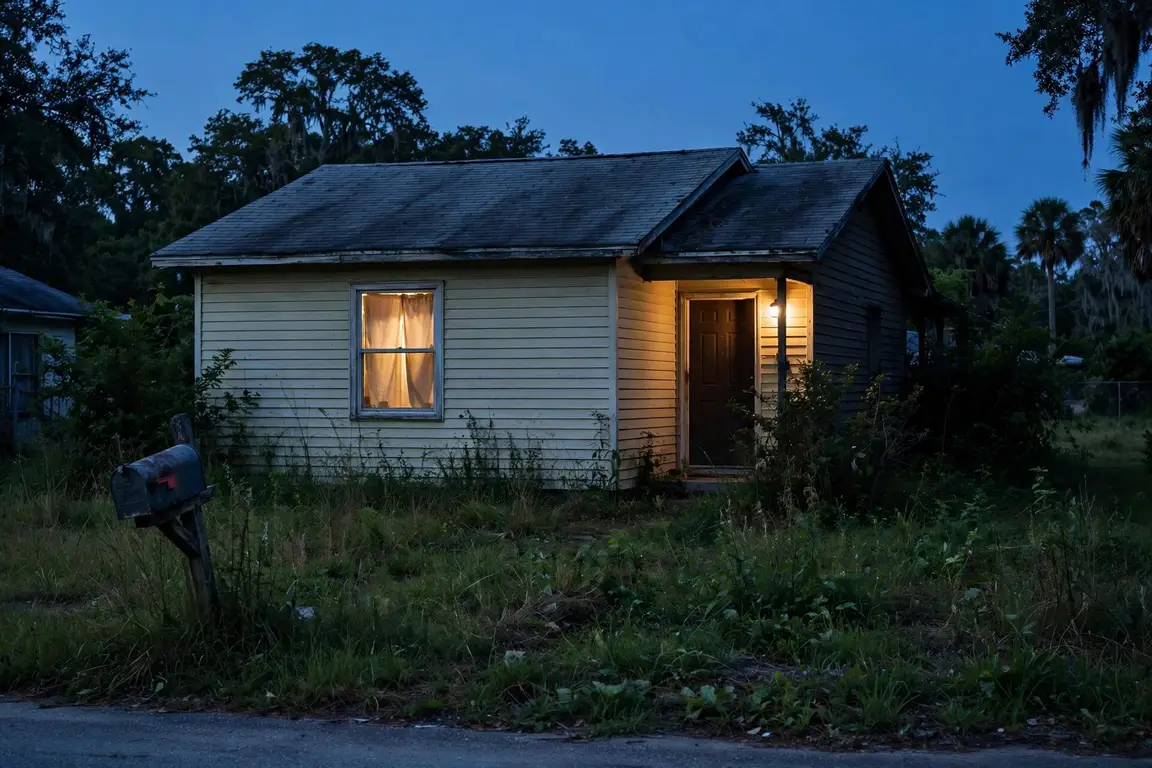

It usually starts with a drive-by. An heir stops at the house a parent left behind and sees a car in the driveway and a curtain that was never theirs. Or a neighbor calls about lights on in a house that is supposed to be empty. Someone is living in a house you own, you never invited them, and every instinct says to go change the locks today.
Hold that instinct. Florida gives owners real tools for this problem, including a fast one that did not exist before 2024, but the wrong first move can turn a removal that takes days into a court case that takes months. I buy houses in Jacksonville and across Northeast Florida, including houses with people in them who should not be, and this page walks through the law as it stands, what it costs, what never to do, and the exit where the problem becomes the buyer’s instead of yours. One note before the details: this is general information about how Florida handles unauthorized occupants, not legal advice about your property. Occupied-house situations turn on specific facts, and a Florida real estate attorney is the right call before you act on any of them.

First question: squatter, tenant, or guest who stayed
Everything in Florida law turns on which of these the person is, and the labels are legal, not emotional.
A squatter entered without permission and never had any. No lease, no invitation, no history of paying rent to you or the prior owner. A tenant has or had an agreement, written or spoken, and tenant law protects them even when they stop paying. A guest or family member was let in by someone, a relative, the deceased owner, a prior occupant, and overstayed. That middle and third category are where owners get hurt, because a person who was ever a tenant, or who can plausibly claim to have been one, is not handled the same way as a true squatter. Police and sheriffs hear tenancy claims at the door, sometimes backed by a fake lease the occupant printed that morning. Sort out honestly which one you are facing before choosing a route, because the fast route below is only for the true squatter case. If the house came to you through an estate, the occupancy question often sits alongside the court process, and the timeline in my step-by-step guide to selling an inherited house in Jacksonville shows where the two tracks meet.
The 2024 Florida squatter law and the sheriff process
Florida changed this area of law in 2024. House Bill 621, effective July 1, 2024, created section 82.036 of the Florida Statutes, a process that lets a property owner ask the county sheriff to remove unauthorized occupants without first filing a court eviction case. It exists because the old route, court only, left vacant and inherited houses occupied for months while owners paid the carrying costs.
The process, in plain terms: the owner or the owner’s agent files a sworn complaint with the sheriff of the county where the property sits, Duval County here in Jacksonville. The complaint states under oath that the owner owns the property, that the occupant entered and remains unlawfully, that the owner has directed the occupant to leave, and that the occupant is not a current or former tenant and is not in a pending court fight over the property. If the sheriff verifies the complaint, the sheriff serves a notice to vacate immediately, and occupants who refuse can be removed and the property handed back to the owner, who may then change the locks. The sheriff charges fees for the service and for standing by during the removal. Where the conditions are genuinely met, owners have seen this resolve in days rather than the months a contested court case can take.
The same law added criminal penalties around the edges of this problem: presenting false documents claiming a tenancy, listing or renting out a property you do not own, and causing serious damage while occupying a home unlawfully can all be charged as crimes. It also created a civil remedy for an owner whose property was damaged, and a remedy for a person wrongfully removed, which is the law’s own reminder to use the process only when the facts truly fit it.
When the sheriff route does not fit: unlawful detainer and eviction
The sheriff process has edges, and honest attorneys will tell you where they are. It is not available against a current or former tenant. It gets complicated when the occupant claims a tenancy the owner disputes, when ownership itself is tangled inside an estate that has not finished probate, or when the occupant arrived through a prior owner’s arrangement. When the fast route does not fit, Florida’s court routes remain.
Unlawful detainer, under Chapter 82 of the Florida Statutes, is the court action for removing someone who occupies without a tenancy and without a legal right to be there. The owner files, the occupant is served, a hearing is held, and the court issues a writ of possession that the sheriff executes. A smooth, uncontested case can resolve in a few weeks; a contested one, with continuances and claims to sort out, can run a few months. If the person was actually a tenant at some point, the route is an eviction under Chapter 83 instead, with its own notice periods and steps, and skipping steps restarts the clock. For an estate property, the probate itself may need to reach the point where the person directing the removal clearly has authority, which is one reason the occupancy problem and selling a house during probate in Florida so often travel together.
Costs vary with the route and the fight. The sheriff process is mainly the complaint and the sheriff’s service and standby fees. A court case adds filing fees, service of process, and usually an attorney, and owners commonly spend somewhere in the low thousands of dollars before a contested removal is finished, plus the carrying costs of the house for every month it runs. Those carrying costs, taxes, insurance, and the risk of damage to a house you cannot enter, are the number sellers forget to count.
What you must not do
The self-help list is short and absolute. Do not change the locks while the occupants are out and lock their belongings inside. Do not shut off the water or power, remove doors or windows, or take the occupants’ property. Do not threaten anyone at the door. For anyone who qualifies as a tenant, section 83.67 of the Florida Statutes prohibits exactly these moves and gives the tenant a claim for damages, and Florida courts do not look kindly on lockouts in disputed cases either. Even against a true squatter, a lockout you perform yourself risks a confrontation at the property, a claim that you removed the occupant wrongfully, and a sheriff who was ready to help you yesterday now looking at a mess with two sides. The legal routes above exist so the removal is done by the sheriff, on paper, once. Let them be the ones who knock.
Two quieter mistakes belong on this list. Do not accept money from the occupant. Rent accepted can be used to argue a tenancy exists, and a tenancy claim is the one thing that closes the fast route. And do not sign anything the occupant hands you, including a homemade agreement to leave by a date, without an attorney reading it first. Cash for keys, a voluntary paid agreement to vacate, is legal and often smart when it is real, voluntary, and documented with a lawyer’s help; it is a trap when it is improvised at the door.
Why selling the normal way barely works
Owners ask whether they can just list the house and let the sale sort it out. In practice the listing route collapses early. Agents cannot show an occupied house safely or on schedule. Retail buyers will not write offers on a house they cannot walk through, and lenders will not fund one with an unresolved occupancy problem. The pool shrinks to investors, and an investor buying an occupied problem house prices in the removal process, the timeline risk, the possible damage, and the months of carrying costs, the same list from the sections above. The house also keeps costing you money and sleep while it waits: an owner can be liable for what happens at a property they own but cannot control, and insurers dislike vacant and irregularly occupied houses for good reason. Vacant houses draw occupants in the first place, which is the pattern behind my guide to selling a vacant house in Jacksonville: the longer a house sits empty, the more problems move into it.
The as-is route: sell the house and the problem together
Here is the exit I offer. You do not have to remove anyone before you sell to me. I buy houses in Jacksonville with unauthorized occupants in place, at a price that reflects the removal process I will run after closing: the legal route that fits the facts, the timeline it takes, and the condition I find when the house is finally empty. The contract names Synergy Redevelopers, LLC as the buyer, my own funds close it, and the occupants, the paperwork, and the sheriff become my problem on the day the sale closes, not yours.
That trade has to be honest in both directions. My number will be lower than a clean, empty house would bring, because the removal cost and risk are real and they transfer to me. What you get in return is an end date. No filing, no hearings, no door to knock on, no months of taxes and insurance on a house you cannot enter, and no chance that one wrong move at the property turns your removal into your lawsuit. For an heir handling an estate from another state, or a personal representative whose authority is still moving through probate, that clean break is usually the entire point. The mechanics of the sale itself are the same ones in my breakdown of selling a house as-is with no repairs: one walkthrough, an offer built on the real situation, and a closing date picked with you when the title work allows.
If you own a Jacksonville house with someone in it who should not be, call me at (904) 867-8673. Tell me what you know about how they got there and what paperwork exists. I will tell you plainly which route I would run if the house were mine, what I can pay with the problem priced in, and where an attorney should look before anybody acts. Whether you sell to me or work the legal process yourself, you will hang up knowing the map.
Questions owners ask me about squatters
What is the fastest legal way to remove a squatter in Florida? For a true squatter, the process created by the 2024 law, section 82.036, Florida Statutes: a sworn complaint to the county sheriff, verification, a notice to vacate, and removal if the occupant refuses. Where the conditions are met, it can resolve in days. It is not available against a current or former tenant.
Can I just change the locks when they leave for the day? Do not. For tenants, lockouts and utility shutoffs are prohibited by section 83.67 and carry damages. In disputed cases a self-help lockout can expose you to claims and turn a clean removal into a two-sided court fight. The sheriff routes exist so the removal happens once, on paper, by the sheriff.
What if the person says they have a lease? A claimed lease is the most common complication. It may be fake, and presenting false tenancy documents was made a criminal offense under the 2024 law, but the claim still has to be sorted out, and it can push the case from the sheriff process into court. Show every document to a Florida real estate attorney before acting.
How long does an unlawful detainer take in Jacksonville? An uncontested case can move in a few weeks. A contested one, with hearings and continuances, can run a few months. The honest range depends on the facts and the court’s calendar, which is why the carrying costs of the house belong in any decision about routes.
Can I sell a house with squatters still in it? Yes. There is no Florida rule that a house must be empty to be sold. The buyer takes the property with the occupants in place and runs the legal removal after closing. Expect the price to reflect the removal cost, the timeline, and the risk, because all three transfer to the buyer at closing.
Should I offer cash for keys instead? It can be the fastest and cheapest exit when the occupant agrees voluntarily and the agreement is written properly. It should be documented with an attorney’s help, paid only when the house is actually empty and handed over, and never improvised at the door. Done badly, it can create the tenancy argument you were trying to avoid.
Is this article legal advice? No. It is general information about how Florida handles unauthorized occupants, written from a buyer’s side of the table. Your facts decide your route, and a Florida real estate attorney should review them before you act.