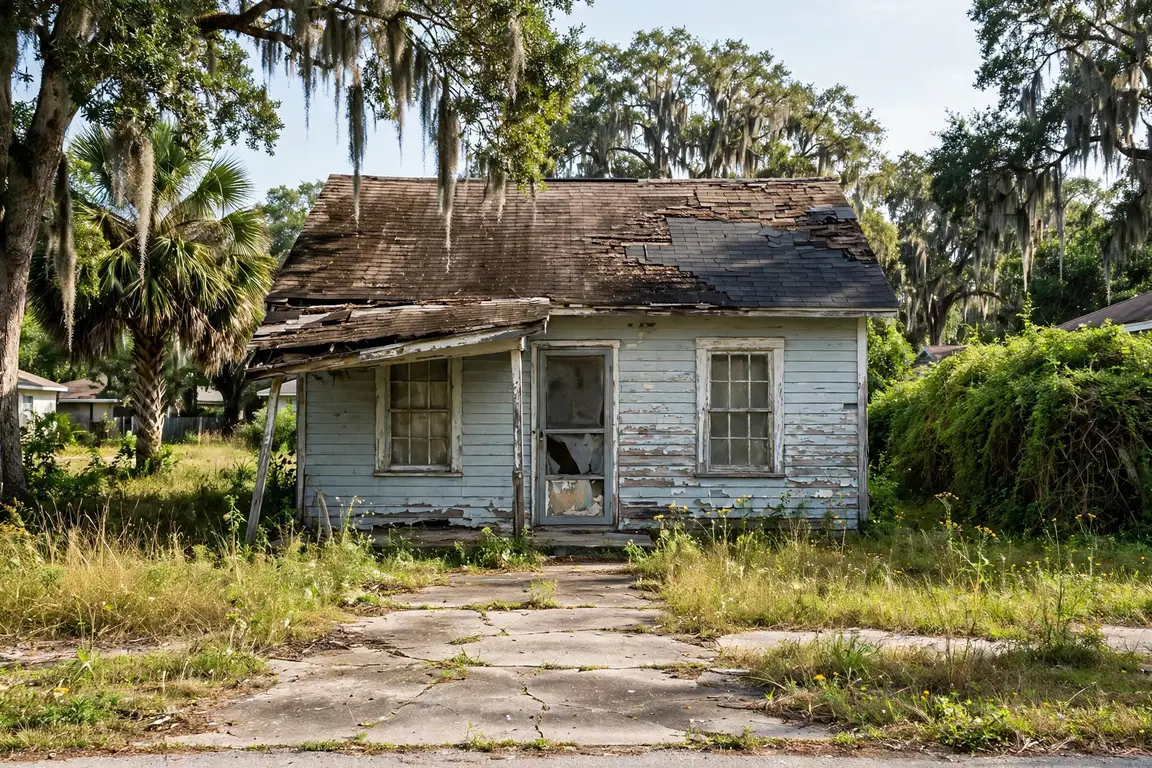

Most of the houses I get called about are not “needs paint” houses. They are roof-at-the-end-of-its-life, AC-dead-since-July, kitchen-from-1987 houses, sometimes with a leak that ran for a year before anyone caught it. The owner has usually already priced the repairs, and the number is exactly why they are calling me.
So let me answer the question in the title plainly. Yes, you can sell a house in bad condition quickly, without doing the repairs and without paying agent commissions. What you cannot do is get all of that and a top-of-market price in the same deal. Speed and certainty cost something. The job is knowing what they cost in each lane, in real numbers, before you pick one.
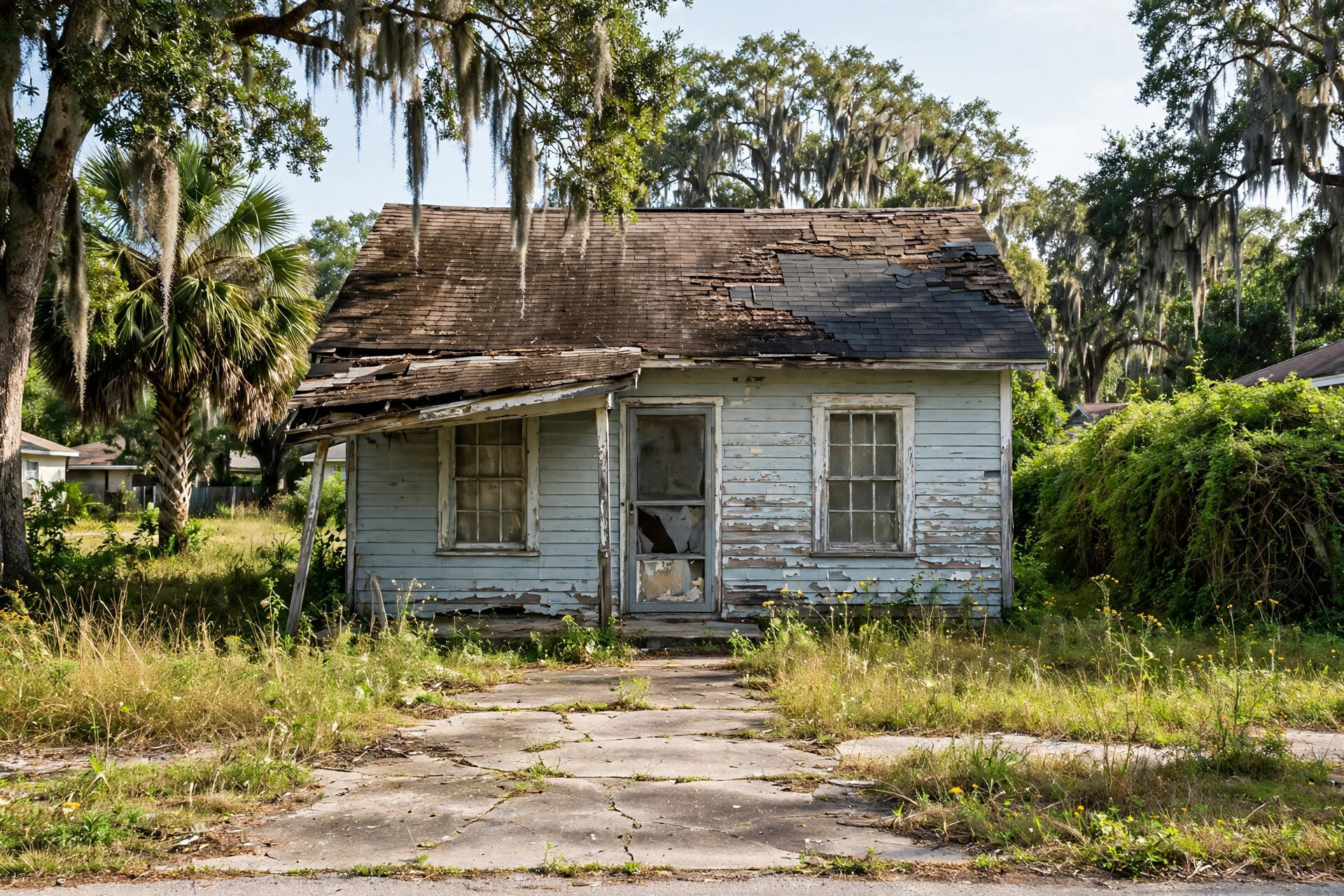
I am Jesse Wyatt, owner of Synergy Redevelopers, LLC in Jacksonville. I have been buying houses across Northeast Florida for more than 10 years, and bad condition is most of what I buy. Here is how the three lanes actually net out.
What “bad condition” actually means
Bad condition is not dated. Dated sells fine. Bad condition is when the big systems are done or failing:
- A roof that is past its life, curling, leaking, or patched in three places
- An HVAC system that is dead, or one Jacksonville summer away from it
- Foundation cracks, settling, floors that slope
- Water damage from a slow leak, and whatever grew behind the wall while it ran
- A house full of stuff that needs a full cleanout before anyone can walk it
- Code violations, open permits, or work that was done without either
- Plumbing and electrical from another era, all of it still in service
The condition level matters because it decides who can even buy your house. A normal retail buyer needs a mortgage, and lenders have minimum property standards. A dead roof, no working heat, or active water damage can kill an FHA or VA loan outright, and plenty of conventional ones too. So at this level your realistic buyer pool is mostly cash buyers and investors. ATTOM put all-cash purchases at 39.1% of U.S. home sales in 2025, the highest share since 2013, so cash is a normal way houses change hands now… it is just a different market than the listed one, with different math.
Lane 1: sell as-is to a cash buyer
This is the fast lane, and it works the way it sounds. A buyer walks the house once, writes an offer based on what he saw, and if you accept, you close at a title company on a date you pick. No repairs, no cleanout unless you want to take things with you, no showings, no strangers walking through on weekends. Closings often land one to three weeks out, once title is clear.
The trade is price. You are selling certainty, and the buyer charges for it. How much is in the math section below, because you should see exactly where the number comes from instead of taking my word for it.
Lane 2: list it as-is on the MLS
Plenty of owners list a bad-condition house as-is, and sometimes it works. But go in clear on what “as-is” means on a listing. It means you will not fix anything. It does not mean the inspection goes away. The standard Florida Realtors and Florida Bar “As Is” contract still gives the buyer an inspection period, and the buyer can cancel during that window. Buyers also ask for price credits after the inspection, which is a negotiation you already tried to skip.
And notice who shows up. At this condition level, the buyers who can actually close are mostly the same cash buyers from lane 1, except now there are two agents in the middle of the deal and months of carrying costs while you wait. If two investors compete, the gross price can come in higher. Then commissions come out, and so do the credit requests, and so does another month or two of taxes, insurance, and utilities. I run that math with sellers at their kitchen tables, and lane 2 wins less often than people expect.
Lane 3: fix it first, then list
The idea sounds right: spend the money, get the retail price. At this condition level it usually fails, for three reasons that have nothing to do with effort.
First, the repair list is not paint and carpet. It is the big items, at retail contractor prices, and Jacksonville contractors are booked out like everyone else. Second, you rarely get the money back. A $45,000 roof and HVAC spend does not add $45,000 to the price of a house that still has a 1987 kitchen… it mostly just makes the house financeable, which the next buyer’s lender required anyway. Third, you need the cash or the credit to fund the work, plus months of holding the house while it happens.
Repair-first is a fine plan when a house’s problems are cosmetic. When the systems are shot, it usually turns a certain sale today into an expensive maybe next spring.
What a cash buyer actually deducts
Every real buyer I know runs some version of the same four lines. Once you see them, you can check any offer anyone hands you:
- Start with the fixed-up value… what the house would sell for, repaired, on the open market. Call it the after-repair value.
- Subtract the repairs, at real contractor prices, plus a buffer for what opens up once walls come apart.
- Subtract the holding and selling costs: taxes, insurance, utilities while it sits, and the commissions and closing costs the buyer pays when he sells it later.
- Subtract his margin. This is the profit that makes the risk worth taking, and it is a real line, not an insult.
What is left is the offer. A worked example in round numbers: the house fixed up is worth $300,000. Repairs run $68,000. Holding and resale costs take about $30,000. The buyer’s margin is $30,000. The offer lands in the low $170,000s.
Two things follow from that. An offer well above every other offer is usually not generosity… it is a hook, and the price tends to get “corrected” later. And the most useful question you can ask any buyer is simple: show me your repair number. A buyer who walks you through his math line by line is working from a real estimate. A buyer who cannot explain the number just made it up.
Repairs that are never worth doing before an as-is sale
If you are selling as-is, do not spend on: a new roof, an HVAC replacement, foundation work, a kitchen or bath remodel, new windows, or a repipe. You would pay retail for the work, and the buyer still discounts for everything else on the list. He also buys those repairs at contractor rates you do not have access to, so your dollar buys less repair than his does.
The short list that sometimes is worth it is cheap and fast: a dumpster and a cleanout if the house is full, because an empty house walks and prices better than a packed one. Mowing and basic yard cleanup. Stopping an active leak at its source, which is a small plumbing bill, not a repipe. Securing a broken door or window. The rule I give sellers: spend only what stops the bleeding or lets a buyer walk the house. Never spend on anything a buyer would rip out and redo anyway.
The commissions part, honestly
The title of this article promises no commissions, so here is exactly what that means. A direct sale has no listing agent and no buyer’s agent in it, so there is no commission line at all. It is not a discount or a trick… there is simply nobody to pay one to. Normal closing costs still exist on any sale, things like title work and Florida doc stamps, and when I buy a house, I cover the standard closing costs on my side of the deal.
On a listed sale, commissions are negotiable, but they are real money. Clever Real Estate’s 2025 survey of agents put the average combined commission at about 5.4% of the price. On a $250,000 sale that is roughly $13,600 out of your side of the settlement statement. So the listed lane does not beat a cash offer until its price beats the offer by the commission, the carrying costs, and whatever credits the buyer negotiates after inspection. Sometimes it does. Run both numbers before you decide, not just the headline prices.
How to vet a buyer, and the red flags
Before you sign anything, ask for four things. Proof of funds with the buyer’s own name on it, a recent statement or a lender letter, not a screenshot of somebody else’s account. An earnest money deposit that goes to the title company, in an amount that would hurt a little to lose. The name of the actual buyer… the person or company that will own the house at closing. And a close date in writing, with a local title company you can call and verify.
The red flags I would walk away from: a big offer made sight unseen that shrinks after a so-called inspection. Pressure to sign today, before you can talk to anyone else. A contract with a 30 or 45 day “feasibility” or inspection period that ties your house up while the buyer shops it around. A buyer who will not name the title company. And a buyer who turns out to be selling your contract to other buyers instead of closing on it himself… ask directly whether the contract can be assigned, and get the answer in the paperwork.
One more thing, because it is free: get more than one offer. The spread between cash buyers on the same house is real, and a second offer is the cheapest negotiating leverage you will ever have.
The decision, in one paragraph
If the house were in decent shape, I would tell you to list it. At this condition level, do the honest version of both calculations: the listed price minus commissions, minus the credits and carrying costs, against a cash offer with the buyer’s repair math shown to you. Whichever nets more in real life is your answer, and it is a closer call than either side’s sales pitch admits. If you want a second set of eyes on the numbers, that is a normal Tuesday for me.
You can see exactly how we buy houses, and what as-is legally covers in Florida is in my article on selling a house as-is in Florida. If you would rather skip the math and get a number on your house, call me at (904) 867-8673 or start at sell my house fast in Jacksonville. No repairs, no cleanout, no obligation for asking.
Frequently asked questions
Can I sell a house in bad condition without fixing anything at all? Yes. As-is means the house sells in its current condition, and a direct cash sale has no repair requirement in it. You do still have to disclose known defects that materially affect the value and are not obvious to a buyer… that duty exists in Florida no matter what the contract says, and the as-is Florida article linked above covers it in detail.
Do I owe commissions if I sell directly to a cash buyer? No. Commissions are paid to agents, and a direct sale has no agents in it. You will still see ordinary closing costs on a settlement statement, and who pays which of them is spelled out in the contract.
How fast can a house in bad condition actually close? With a cash buyer, often one to three weeks once the title work comes back clean. Houses with title problems, old liens, or an estate that has not been through probate take longer, because the paperwork has to catch up before any buyer can close.
What if the house has code violations or an open permit? It is still sellable as-is. A buyer prices the violations into the offer, and anything owed to the city gets settled at closing out of the proceeds. What you should not do is ignore a violation notice… bring it to the first conversation so it is in the numbers from the start.
Why is one cash offer so much lower than another? Usually the repair estimate. Two buyers can walk the same house and price the roof, the systems, and the unknowns very differently, and the margin line varies too. That is why asking each buyer to show his repair number matters more than the offer itself. The offer is an opinion. The math behind it tells you whether to trust it.