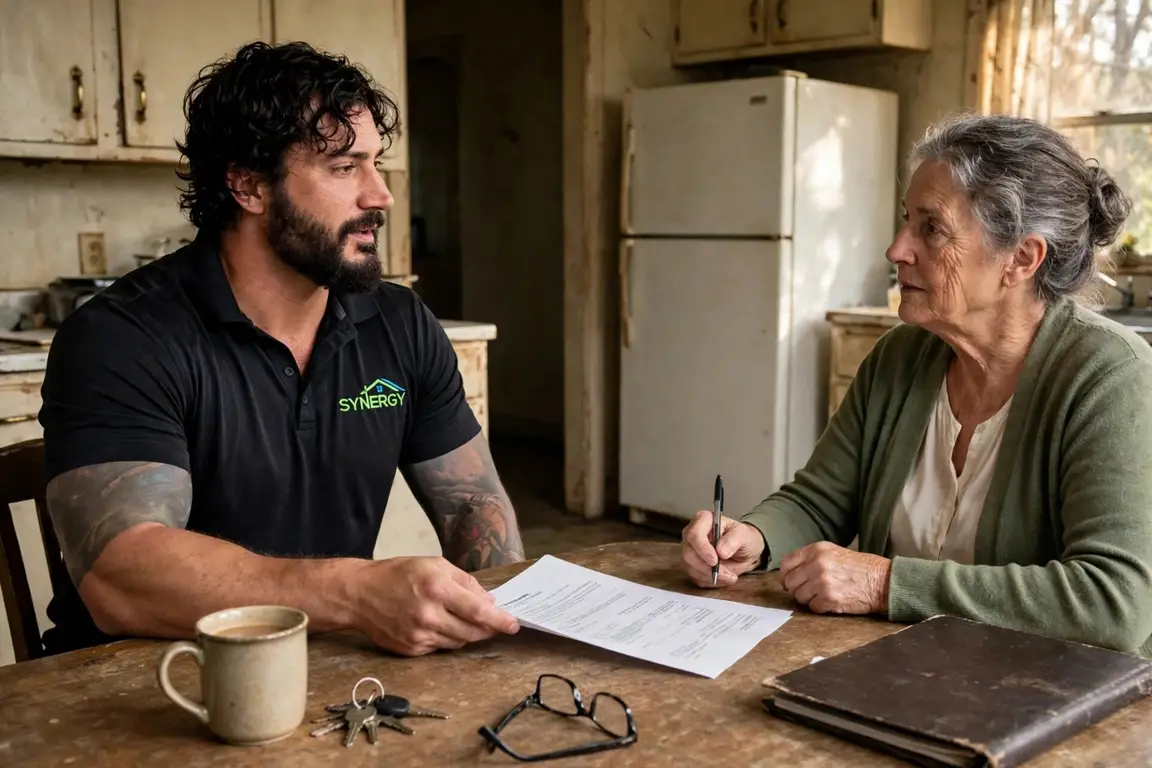

Yes. In Florida, you can sell your house as-is and skip the inspection entirely. No state law says a home sale needs one. An inspection is a contract term, not a legal requirement, and if the buyer agrees to buy without it, the sale closes the same way any other sale closes: title work, paperwork, a closing table.
I am Jesse Wyatt, owner of Synergy Redevelopers, LLC in Jacksonville. I have been buying houses across Northeast Florida for more than 10 years, and most of the houses I buy never see a formal inspection. So here is how a no-inspection sale actually works, what you give up when you agree to one, what you gain, and the one Florida duty that follows you no matter what the contract says.
What “without inspection” really means
It does not mean the buyer buys your house blind. In practice, one of three things happens.
Some buyers waive the inspection outright and put that in writing. They have looked at enough houses to price what they can see, and they would rather have a clean, simple contract than a two-week window to renegotiate.
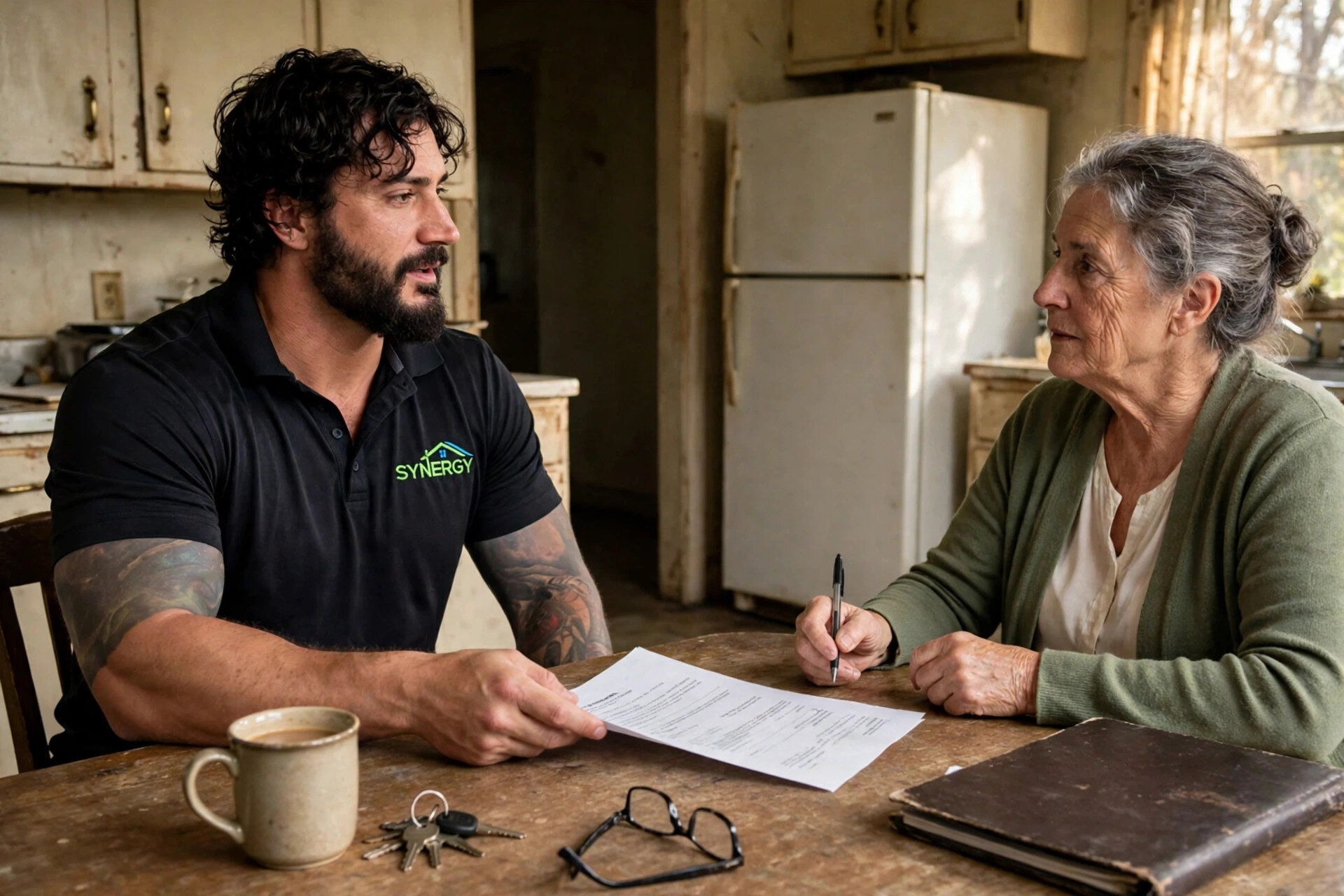
Some buyers do their own walkthrough instead. That is my pattern. I walk the house once, I look at the roof from the ground, I run the water, I note the age of the air handler, and I build what I found into the price. There is no inspector’s report, no repair list, and no second round of price cuts after we agree. What I saw is already in the number.
And some buyers bring a contractor or a home inspector along on their own dime during a showing, before an offer is ever written. That is their homework, not a contingency in your contract.
The difference that matters is not whether somebody looked at the house. It is whether the contract gives the buyer a period where they can walk away, or demand repairs, based on what an inspection turns up. In a no-inspection sale, that period does not exist.
A listed as-is sale is not the same thing
Here is the part that surprises people. If you list your house with an agent, the standard Florida Realtors and Florida Bar “As Is” contract still hands the buyer an inspection period. The buyer can inspect, and can cancel during that window for any reason tied to the property’s condition. Plenty of listed as-is sales die right there, two weeks in, after the seller has already turned down other buyers.
So “as-is” on a listing mostly means you will not make repairs. It does not mean the inspection goes away.
A direct sale to a cash buyer works differently because the contract is written that way from the start. No inspection period, no contingency, no repair negotiation. I covered the legal side of what as-is does and does not cover in my article on selling a house as-is in Florida. This one is about the inspection piece specifically.
What you gain, and what you give up
What you gain is certainty and speed. The two most common ways a home sale falls apart are financing and inspections. A cash sale with no inspection contingency removes both. You also skip the repair credit dance, where a buyer asks for $18,000 off because an inspector wrote down every scuff in the house.
What you give up is price. That trade is real and you should walk into it with your eyes open. A buyer who takes a house unseen-by-an-inspector is pricing the unknowns himself, and he prices them cautiously. A house that could be cleaned up and listed will usually bring more on the open market… if it survives the inspection, the appraisal, and two months of showings. Some do. Plenty of the houses I buy would not, which is exactly why their owners called me.
My rule of thumb: if your house is in good shape and you have time, list it and take the inspection like everyone else. If the house needs work you are not going to do, the no-inspection route is often worth more in real life than the higher number that never closes.
The Florida duty that does not go away: disclose what you know
Skipping the inspection does not skip your disclosure duty. Florida settled this in 1985, in a case called Johnson v. Davis. The Florida Supreme Court held that where a seller knows of facts materially affecting the value of the property, facts that are not readily observable and are not known to the buyer, the seller has a duty to disclose them.
Three questions sort out whether something belongs on the table. Do you actually know about it? Does it affect the value? Would a buyer miss it on a normal look around? If all three answers are yes, say it. The roof leak that only shows during hard rain. The flooding that reached the baseboards two summers ago. The back bedroom fire that got patched and painted.
Florida courts have also held that an as-is clause does not waive this duty. As-is protects you from repair demands and from arguments about things nobody knew. It does not protect a seller who knew and stayed quiet. That seller has not outsmarted the system… they have built the buyer’s lawsuit, and the case above is the reason why.
Notice what the duty does not ask of you. You do not have to hire an inspector to go hunting for problems before you sell. You do not have to warranty the house or certify anything. You have to be straight about what you already know. In my deals, that is a five-minute conversation, and it has never killed a purchase. Known problems go into the price. Hidden ones come back as legal bills.
What as-is does not protect you from
A short list worth knowing before you sign anything:
- Active concealment. Painting over fresh water stains the week before a sale, or rolling back evidence of a problem, is worse than the problem itself. Disclose instead.
- The flood disclosure. Since October 1, 2024, Florida law (section 689.302) requires sellers to give buyers a flood disclosure covering flood damage during your ownership and any flood claims or assistance. It applies to as-is sales too.
- The radon notice. Florida law (section 404.056(5)) requires the statutory radon gas notice to appear in a document signed at or before the contract. It is a notice, not a test. Nobody is making you test for radon.
- Lead-based paint. If your house was built before 1978, federal law requires the lead-based paint disclosure and pamphlet, whatever the contract says about condition.
- Association paperwork. Condo and HOA sales carry their own document and disclosure requirements. As-is language does not erase those either.
None of this is a reason to avoid an as-is sale. It is a reason to do the paperwork honestly, which takes an afternoon, not a month.
How closing works with no inspection contingency
The closing itself is ordinary, and that is the point. Once we agree on a price and sign a simple purchase agreement, the file goes to a local title company. They search the title, sort out any liens or old permits, and prepare the closing documents. You pick a closing date that fits your move. On a straightforward house with clear title, I can usually close in about two weeks, and faster when a situation calls for it.
What is missing from that timeline is everything that normally stretches it: no inspection scheduling, no repair estimates traded back and forth, no re-inspection, no lender appraisal, no underwriting. Fewer moving parts, fewer chances for the deal to die. If you want the full step-by-step of how I run it, that is laid out on my how we buy houses page.
What I look at when there is no inspector
Since sellers ask: when I walk a house, I am looking at the big systems and nothing fussy. Roof age and condition. The air handler and its year. Signs of water where water should not be. The electrical panel. The general bones. I am not counting nail pops or testing every outlet, because I am not building a case to renegotiate. I am deciding one number, and that number is the offer. If we shake on it, it closes at it.
The houses where this comes up most
In Jacksonville, the no-inspection sale tends to show up on the same kinds of houses. A rental in Arlington or the Northside where the owner is done being a landlord and the last tenant left the place rough. An inherited house in Mandarin that has been sitting with the utilities off, where nobody in the family lives close enough to manage an inspector, a repair crew, and a listing. A solid older house on the Westside with a roof at the end of its life, where the seller knows an inspector’s report would read like a ransom note and every retail buyer would use it to chop the price twice.
In each of those, the seller is not hiding from an inspection. They have done the math and decided that the result of one is predictable enough that they would rather price it in once and be finished. That is a reasonable decision, and it is the decision my whole business is built around.
Frequently asked questions
Is it legal to sell a house in Florida without an inspection?
Yes. No Florida law requires an inspection for a home sale. Inspections exist because contracts create them. If buyer and seller agree in writing that there is no inspection period, the sale proceeds without one.
Can a buyer still back out of a no-inspection sale?
They can back out only on the grounds the contract itself gives them, which in a clean cash agreement is very little. That is the point of the structure. Title problems that cannot be cleared are the usual exception, and those surface at the title company, not at an inspection.
Do I still have to disclose problems if there is no inspection?
Yes. Under Johnson v. Davis, you must disclose defects you know about that affect value and that a buyer cannot readily see. Skipping the inspection never skips that duty, and an as-is clause does not waive it.
Will I get less money selling without an inspection?
Usually, yes, compared to a best-case retail listing. The buyer is taking on the unknowns, and the price reflects that. The honest comparison is not best case against cash offer. It is the cash offer against what a listing actually nets after repairs, credits, commissions, and months of carrying costs, if it closes at all.
Does a cash buyer ever require an inspection?
Some do, especially national companies that send a local inspector after you have signed, then adjust the price. Ask any buyer, including me, one direct question before you sign: is there any step after this agreement where the price can change? Get the answer in writing.
If you want the simple version
If your house needs work and you would rather be done than be listed, call me at (904) 867-8673 or start at my sell my house fast in Jacksonville page. I will walk the house once, tell you plainly what I can pay, and put it in a short written agreement with no inspection contingency and no repair list. If listing makes more sense for your house, I will tell you that instead.