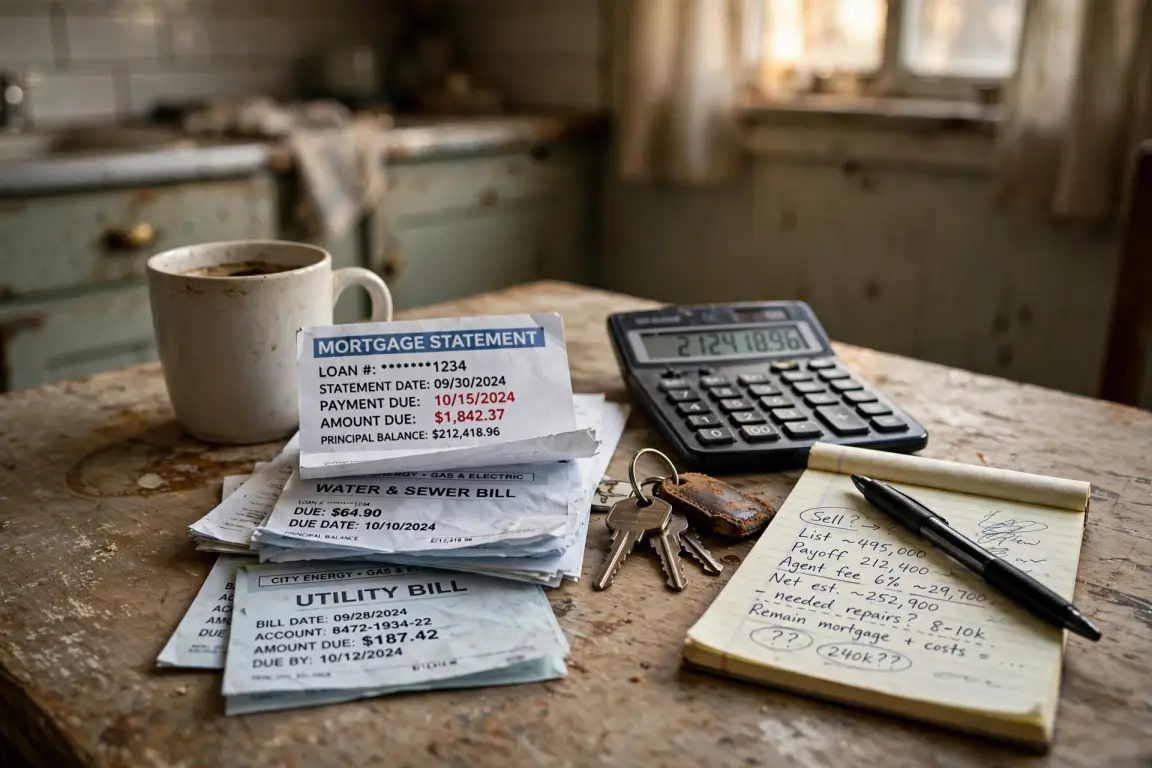

Almost every house I buy in Jacksonville still has a mortgage on it. And almost every seller asks me the same thing in our first conversation: what actually happens to my loan when I sell?
Short answer: your mortgage gets paid off at the closing table, out of the sale proceeds, and you keep whatever is left. But the details matter, especially if you owe more than the house is worth or you have more than one loan. I am Jesse Wyatt, I buy houses for cash across Northeast Florida, and here is the whole thing in plain English.
The normal case: you owe less than the house sells for
This is the straightforward version. Say you sell for $250,000 and your mortgage payoff is $180,000. At closing, the title company takes $180,000 of the buyer’s money and sends it straight to your lender. That pays off your loan in full. The remaining $70,000, minus any closing costs, goes to you.
You do not write a check to your lender yourself. You do not call them to close the account. The title company orders a formal payoff statement from your lender, which is the exact amount needed to satisfy the loan on the closing date, including interest through that day. They handle the wire. Your loan is satisfied, the lien is released from the property, and the buyer gets a clean title.
One thing sellers do not expect: the payoff amount is almost always a little higher than the balance you see on your monthly statement, because interest accrues daily. That is normal, not a mistake.
Who actually handles the payoff?
The title company or closing attorney does. In Florida, most residential closings run through a title company. Part of their job is to collect every lien against the property, get current payoff figures for each one, and make sure every lender gets paid from the proceeds before a dollar goes to the seller.
This is also why you cannot just sell the house and keep the mortgage money. The lien has to be cleared for the buyer to receive marketable title. No title company will close around an unpaid mortgage.
What if you have a second mortgage or a HELOC?
Same process, second in line. If you have a first mortgage of $180,000 and a HELOC with a $25,000 balance, both get paid at closing from the proceeds. The first mortgage is satisfied first, then the second. You keep what remains.
This is worth knowing because a lot of sellers forget about the HELOC. It is a lien on the property just like the first mortgage, and it has to be paid. If you are estimating what you will walk away with, add up every loan secured by the house, not just the main one.
What if you owe more than the house is worth?
This is the hard one, and I talk to Jacksonville homeowners in this position regularly. If you owe $220,000 and the house will sell for $200,000, a normal closing cannot happen, because there is not enough money to pay off the lender.
You have a few paths. A short sale means the lender agrees to accept less than the full payoff and release the lien. It takes lender approval, it takes time, and it will show on your credit, though usually less damage than a foreclosure. A deed in lieu means handing the property back to the lender voluntarily. And in some cases, bringing cash to the table to cover the gap makes sense if you need out fast and the gap is small.
What you should not do is ignore it. The gap does not disappear, and waiting usually makes it worse as interest and fees pile up. If you are underwater, talk to someone who has handled short sales before you list or sign anything.
What about when you sell to a cash buyer like me?
The mortgage payoff works exactly the same. I am often asked whether selling for cash means the mortgage somehow transfers or disappears. It does not. The title company pays off your lender from my purchase funds at closing, the lien is released, and you get the remainder. The only difference with a cash sale is speed and simplicity: no lender on my side, no appraisal contingency, no waiting on bank approvals. The payoff itself follows the same rules.
A few things that trip sellers up
Prepayment penalties. Most modern residential mortgages in Florida do not have them, but some older loans and certain investor loans do. Check your note. If there is a penalty, it comes out of your proceeds.
Taxes and insurance escrows. If your payment includes escrow, your lender owes you a refund of whatever is sitting in that account after payoff. It does not happen at the closing table. It arrives as a check a few weeks later. Do not spend it twice in your head.
The mortgage does not vanish the day you move out. I have had sellers stop paying the mortgage once they decided to sell. Do not do that. Until the closing funds hit your lender, that loan is yours, and a late payment in the final stretch can still hurt your credit and complicate the sale.
The bottom line
When you sell your house in Florida, your mortgage is paid off at closing from the sale proceeds, handled by the title company, and you keep the rest. Multiple loans get paid in order. If you owe more than the property is worth, you need a plan for the gap before anything else moves forward.
If you are selling in Jacksonville and want to know exactly where you stand, start at synergybuyshousesjacksonville.com. Tell me what you owe and what the house is worth, and I will walk you through the real numbers before you commit to anything.