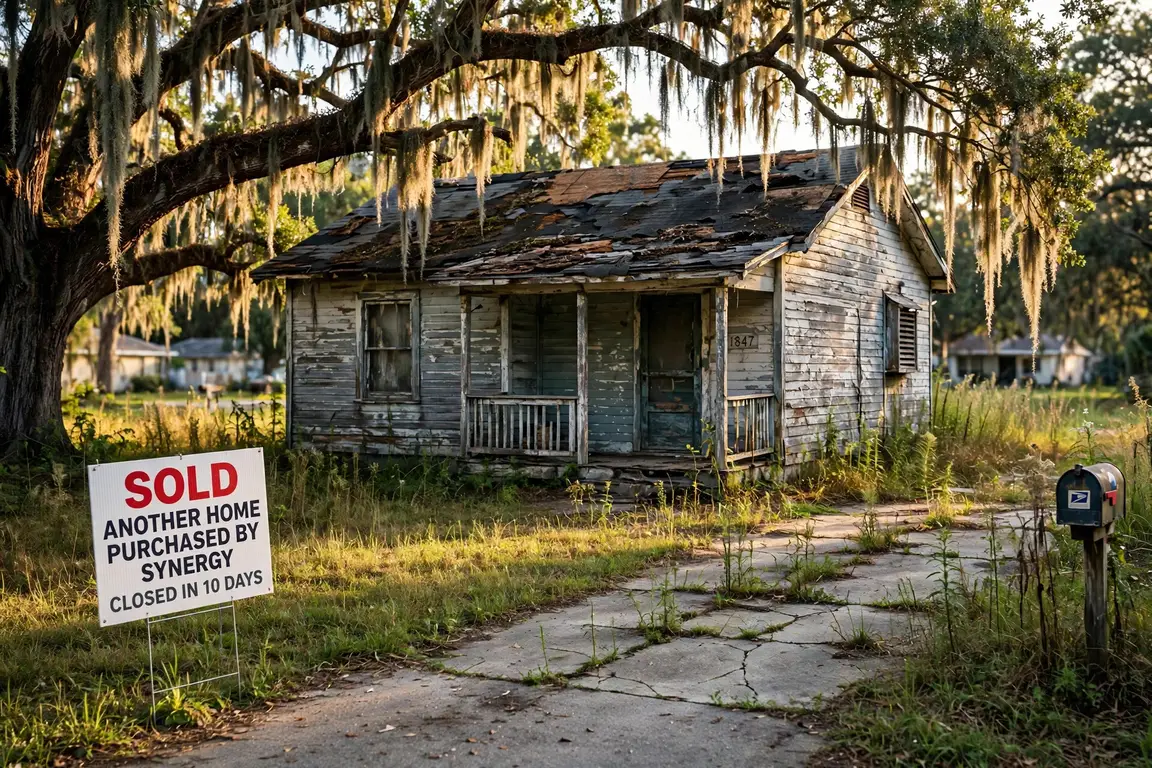

If your house is the one people slow down to look at, and not in a good way, I want you to hear this first: ugly is not the same as unsellable.
Peeling paint. A yard that has taken back the driveway. A roof that should have been replaced years ago. Rooms full of things nobody wants to sort through. I have bought houses in Northeast Florida for 13 years, across more than 300 transactions, and some of the roughest looking houses on their street turned into the simplest sales I have ever closed. Not because the problems were small. Because the process did not ask the seller to fix any of them.
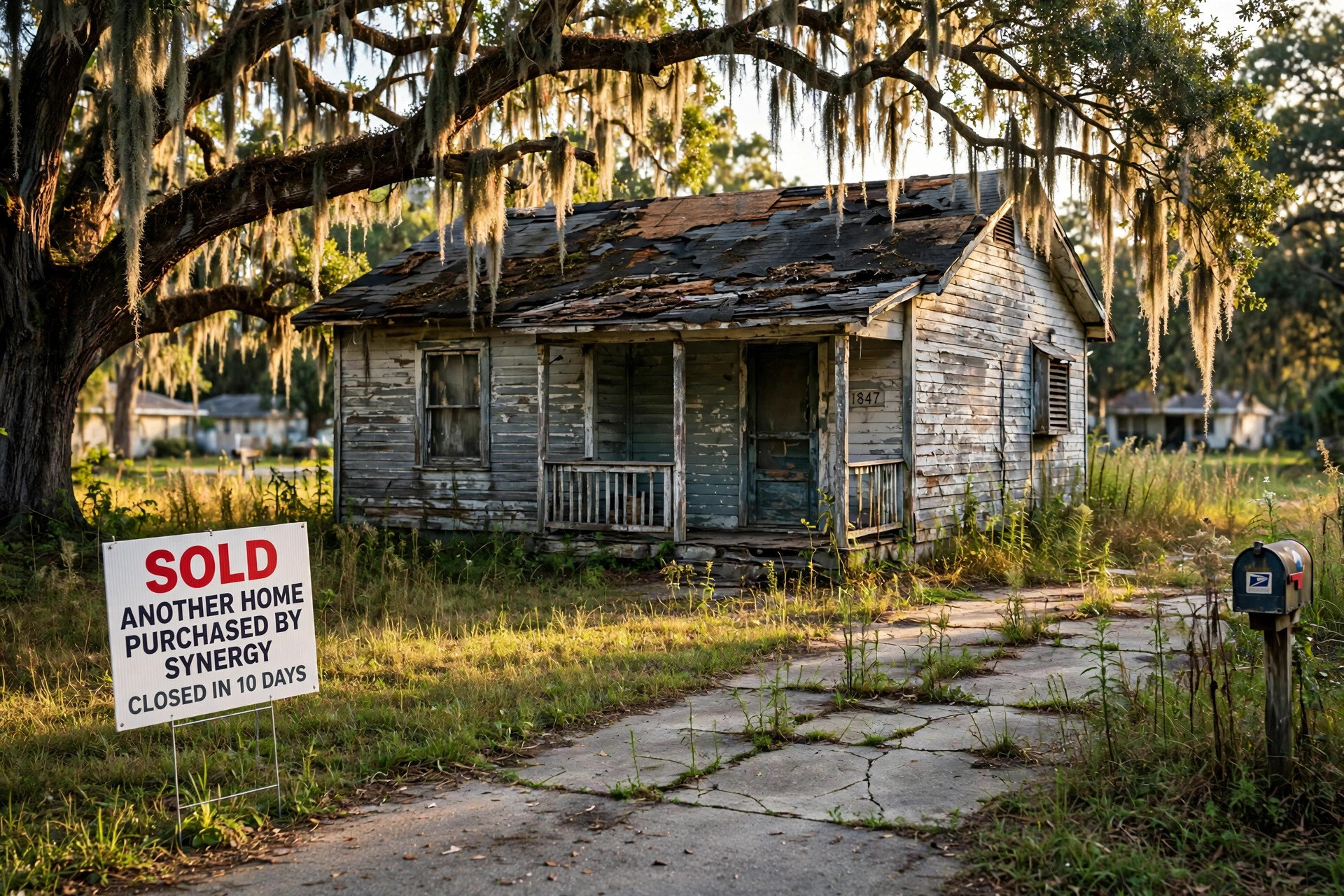
This page is for the owner who has already decided not to renovate, not to clean, and not to spend the next three months being shown around their own home. Here is how selling an ugly house to a cash buyer actually works, what I look at when I price one, and why the closing can move so much faster than a normal sale.
Why an ugly house is so hard to sell the normal way
A traditional listing runs on presentation. The agent wants it cleaned, staged, photographed, and ready for strangers to walk through on a Saturday. The buyers who shop those listings are mostly families using a mortgage, and their lender cares about condition almost as much as they do. A roof at the end of its life, soft floors, dated electrical, or visible water damage can stall an appraisal, trigger repair demands, or kill the financing outright.
So the seller gets handed the list. Fix the roof or credit the buyer. Clear the house out. Deep clean. Paint. Then wait for showings, feedback, offers with contingencies, an inspection, a repair negotiation, and an appraisal, each one a fresh chance for the deal to wobble. For a house that needs real work, that road can take months and still end at the same place, with a buyer asking for a large price cut after their inspector walks through.
None of that means the house has no value. It means the retail process is built for houses that show well, and it charges the seller in time, money, and stress when the house does not.
What I actually see when I look at a rough house
I do not price a house off its worst photograph, and I do not need it to look like anything before I walk through. I am looking at the bones and the math.
I look at the location and the lot, because those do not change. I look at the structure: the foundation, the framing, the roof deck under the shingles. I look at the big systems, meaning the roof, the air conditioning, the electrical panel, and the plumbing, because those are the expensive lines in any renovation. I note the layout and whether the square footage works for the neighborhood. Then I look honestly at the cosmetic layer: floors, kitchens, bathrooms, paint, and the yard. Cosmetics scare retail buyers the most and worry me the least, because they are the cheapest part of a rehab to make right.
The offer comes out of that walk. I estimate what the house will be worth fully renovated, subtract what the renovation will actually cost, and account for the time and expense of holding and reselling it. What is left is the range I can pay and still run a business. I walk through the full breakdown in my article on cash sale fees, the timeline, and how the offer is built, including the parts most buyers would rather keep vague.
Here is the part sellers are usually relieved to hear: nothing on that list requires you to lift a finger first. The overgrown yard, the stained carpet, the kitchen from another decade, the belongings left behind. All of it is already in the math. That is the entire point of selling as-is.
How a fast cash close works, step by step
People hear that a cash buyer can close in as little as 7 days and assume something shady fills the gaps. Nothing fills the gaps. The gaps are just gone. A normal sale is slow because it has a lender, an appraisal, an underwriting department, and a long line of people who each need days to do their piece. A cash closing removes the lender from the room, and most of the timeline goes with them.
It usually runs like this. We talk first, briefly, about the house and your timing. Then I walk the property once, with you or on an arrangement that works for you, and I look at everything I described above. After that walk I give you a written cash offer. No series of visits, no photographer, no parade of retail buyers.
If the number works, we sign a straightforward purchase contract and my earnest money goes to a local title company. The title company runs the title search, which is the one step nobody can skip, because it confirms the seller can legally sell the house and flags any lien or ownership issue that has to be cleared. When the title is clear, we close at the title company, the deed transfers, and your funds are wired or issued the same day.
When title is clear and everyone is ready, that whole sequence can take as little as 7 days. When title turns up something to solve, an old lien, a probate question, a missing signature from an heir, it takes longer, and you will hear that from me directly and early, not at the closing table. Speed is the product, but certainty is the promise behind it: a date I give you is a date I intend to keep.
What you do not have to do
No repairs. Not the roof, not the plumbing, not the hole in the drywall you have been meaning to get to for five years.
No cleanout. Take what you want and leave the rest, including furniture, boxes, and the garage nobody has opened in years. I handle what is left after closing.
No cleaning, no staging, no photos, no showings, no open house, and no strangers walking through on weekends judging the place out loud. One walkthrough with me is the whole show.
No waiting on a bank. There is no mortgage approval behind my offer, no appraisal to argue with, and no financing contingency waiting to undo the contract three weeks in.
That list sounds simple until you price the alternative. A cleanout crew, a dumpster, a roof deposit, weeks of utility bills and insurance on a house you are trying to leave, plus the hours you spend managing every bit of it. Sellers tell me the work list is the reason the house sat untouched for a year before they finally called somebody. When the work list goes to zero, the decision gets a lot easier to make.
The honest trade, in plain words
I will not insult you by pretending a cash offer equals a top-of-market retail price. It does not, and any buyer who tells you otherwise is selling you something. A renovated house sold to a family with a mortgage will almost always gross more than I can pay for the same house in rough shape.
What you are trading is the spread between those two numbers, and what you get for it is everything in the middle removed: the repair bills, the cleanout, the months of carrying costs, the showings, the contingencies, and the risk that the whole thing falls apart anyway. For a house that needs little, has a seller with time, and sits in a strong neighborhood, listing can be the right call and I will say so. For a house that needs a roof, a system, and six weekends of work before an agent will even photograph it, the math flips fast. Run both sets of numbers with your eyes open. That is all I ask, and it is more than most buyers will offer you.
Choose the buyer as carefully as the price
A rough house makes a seller vulnerable, because the worse it looks, the more grateful the seller feels for any offer at all. That gratitude is exactly what the bad operators in this business hunt for. The deadline price cut, the vanishing earnest money, the contract quietly sold to strangers: an ugly house does not deserve any of that, and neither do you. I wrote the full list in my guide to bad wholesalers and the red flags every seller should know, and the short version is simple. Get the offer in writing. Ask who is actually closing. Ask how many contracts they backed out of this year. Call the title company on the contract and ask how that buyer is to work with.
My company is Synergy Redevelopers LLC. My office is at 12574 Flagler Center Blvd, Suite 101, in Jacksonville, and my company carries an A+ rating with the Better Business Bureau. When I sign a contract, my company’s name is on it and my own funds are behind it. I am the face of the company, and I stay reachable from the first call to the closing table.
So if your house is the ugly one on the street, stop apologizing for it. To me it is not an embarrassment. It is inventory, the exact kind of house I buy, renovate, and put back into the neighborhood. Start at synergybuyshousesjacksonville.com, tell me what the house needs, or does not have, and I will give you a straight number in writing and a closing date I own.
Questions sellers with rough houses ask me
Can you really buy a house that needs a new roof and major repairs?
Yes. Major repairs are normal in the houses I buy, and they are figured into the offer from the first walkthrough. You do not need to repair, patch, or cover up anything before I see it. I would rather see the house exactly as it is.
Do I have to clean the house out before closing?
No. Take what you want to keep and leave everything else. Furniture, boxes, trash, and whatever is in the garage or the yard become my problem at closing, not yours.
How fast can we actually close?
When the title is clear and you are ready, I can close in as little as 7 days. The main thing that sets the pace is the title search. If it turns up something that has to be cleared first, I will tell you what it is and what the realistic date looks like.
Will the offer change after you see the house?
My offer is based on the walkthrough, so the condition of the house is already in the number before you sign anything. The roof, the systems, and the repairs are why the walkthrough happens first. What you sign is the number I intend to close at.