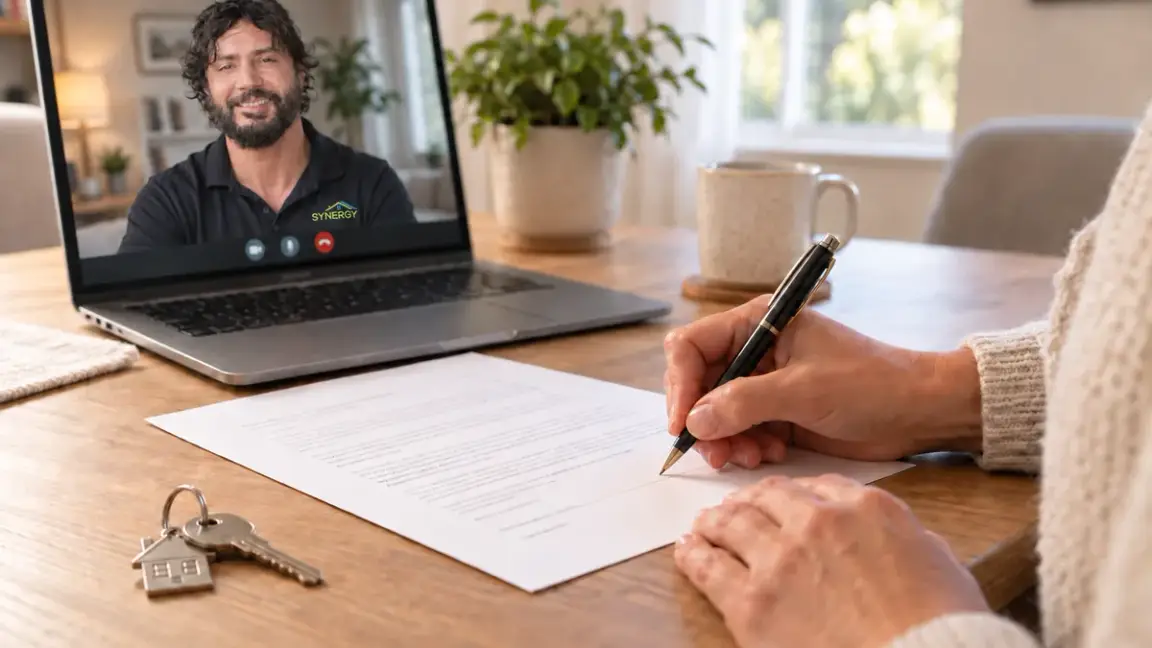
You can often sell a house in Jacksonville remotely without flying to Florida, but the closing professional must confirm which documents can be signed online and which signing method the title insurer, lender, witnesses, and recorder will accept. Florida authorizes remote online notarization, and traditional paper documents may also be signed before an approved local or mobile notary.
This guide explains how remote signing works, what information a seller may need, what changes when an estate or inherited property is involved, and how to protect your proceeds from wire fraud.

Can You Complete a Jacksonville Home Sale Remotely?
In many transactions, yes. Florida has authorized registered remote online notaries since 2020. A Florida online notary who is physically located in Florida may perform an online notarization while the signer and witnesses are somewhere else, using qualifying audio-video technology. The notary must verify identity and record the session under Florida law. The Florida Department of State explains the registration and technology requirements, and Florida Statutes section 117.265 describes the required procedure.
That does not mean every transaction is automatically eligible for a fully digital closing. The title company or closing attorney must confirm what the title underwriter, lender, document type, witnesses, recording office, and remote-notary platform will accept. A signer outside the United States may also face additional requirements.
If online notarization is not appropriate, the closing professional may arrange paper documents and a qualified notary near the seller. The completed package is then returned using the method and deadline provided by the closing professional.
Remote Online Notarization
The signer appears before a registered online notary through approved audio-video technology. The closing professional must confirm identity proofing, document eligibility, witness requirements, title-underwriter approval, and recording requirements.
Paper Signing With a Local Notary
The closing package is delivered to the seller, signed before an acceptable notary, and returned. The closing professional should confirm original-document requirements, witness rules, the return deadline, and the approved shipping method.
Hybrid Closing
Some documents may be signed electronically while others are signed on paper. The closing professional determines which documents require notarization, witnesses, or original signatures.
What Information May Be Needed?
The exact list comes from the title company or closing attorney, but remote sellers commonly need current identification, ownership and contact information, mortgage or lien information, and secure payment instructions. An estate sale may also require court orders, Letters of Administration, a will, death certificate, or other probate documents.
- Identification: A current government-issued credential that meets the notary and closing provider’s requirements.
- Ownership information: The current deed, trust information, entity records, marital information, or court documents relevant to title.
- Payoff details: Information needed to obtain mortgage, lien, association, utility, or other transaction-specific payoffs.
- Settlement instructions: A secure method for receiving and confirming the final settlement statement and proceeds.
A direct cash purchase does not guarantee that the contract price equals the seller’s final proceeds. Mortgages, taxes, liens, prorations, association balances, estate obligations, contract allocations, and other items can affect the amount disbursed at closing. Review the final settlement statement and ask questions before signing.
Protect Your Money During a Remote Closing
Remote closings make verification especially important. Criminals can impersonate title companies, attorneys, agents, buyers, or sellers and send fraudulent wiring instructions. The National Association of REALTORS® recommends confirming instructions using a trusted phone number obtained independently, not a number contained in a last-minute email. It also recommends avoiding ordinary email for financial information. Review the wire-fraud safeguards before sending account information or funds.
Do not act on an unexpected message saying that wiring instructions changed. Call the title company or closing attorney using the telephone number you already verified. If a fraudulent wire is suspected, contact the financial institution immediately and request a recall.
Selling an Inherited or Probate Property From Another State
A remote sale can also work for an inherited Jacksonville property, but the person signing must have the legal authority to sell the interest being conveyed.
In a Florida formal administration, the court appoints a personal representative. The Florida Bar describes Letters of Administration as evidence of that representative’s authority to administer the estate. Whether the representative can sell without a separate court authorization depends on the will, the power of sale, the court orders, and the property’s legal status. Florida Statutes section 733.613 distinguishes between a will that grants an adequate power of sale and situations in which the court must authorize or confirm the sale.
Summary administration, inherited homestead, property already distributed to heirs, trusts, and jointly owned property can require different documents and signatures. A Florida probate real estate guide can help identify the general issues, but the probate attorney and title company should determine who must sign in the specific transaction.
What If More Than One Person Has an Ownership Interest?
The title search and closing professional determine whose signatures and consents are required. Multiple owners may be able to sign from different locations, but each remote or paper signing must satisfy the closing provider’s requirements. Marital rights, homestead status, trusts, powers of attorney, probate orders, and the recorded deed can change the answer.
Owners who are beginning this process can also review the guide to selling an inherited house in Jacksonville.
A Common Remote-Sale Scenario
An out-of-state family may inherit a Jacksonville property containing furniture, personal items, and deferred repairs. The owners first confirm who has authority to sell. The title company identifies the required probate and title documents. The purchase agreement explains the property’s condition, any contents that may remain, the expected closing process, and the allocation of costs. Required signers then use an approved remote or paper-notary method.
How long that takes depends on title, probate, payoffs, document delivery, signatures, funding, and any court approval. A remote closing can remove the need to travel, but it does not eliminate those underlying requirements.
What About the Belongings Inside the House?
Some direct buyers will purchase a property with approved contents remaining, but that arrangement must be written into the purchase agreement. The seller should identify personal papers, photographs, medications, hazardous materials, leased items, valuables, and belongings owned by someone else before leaving anything behind.
For a traditional listing, the seller may choose to remove contents, clean, repair, or stage the property to improve marketability. Those decisions vary by property and sales strategy. An owner dealing with an empty or neglected property may also find the guide to selling a vacant house in Jacksonville useful.
How Synergy Handles Remote Direct Purchases
Synergy Buys Houses Jacksonville buys directly from qualified owners and authorized estate representatives in Jacksonville and surrounding areas. We focus on off-market properties rather than active MLS listings, and we do not accept deal submissions from wholesalers through the seller form.
The process begins with the property information and an ownership review. If the property fits our buying criteria, we evaluate its condition, title situation, access, location, and expected transaction needs. Any offer is no obligation, and all important terms are contained in the written purchase agreement.
Closing dates and cost allocations are transaction-specific. The parties agree on a proposed date, but title, probate, access, payoffs, funding, and document execution can affect the final schedule. Synergy does not charge the seller an agent commission when buying directly, but existing brokerage agreements, liens, taxes, prorations, association charges, estate obligations, and other third-party items may still affect net proceeds.
A direct offer is commonly below the potential repaired, market-ready retail price a seller might pursue through open-market exposure. In exchange, the written transaction may provide an as-is sale, fewer preparation requirements, and a coordinated remote closing. Sellers should compare the expected net proceeds, timing, work, and contractual obligations of each option.
To request a review, visit the cash-offer page or call (904) 867-8673.
Frequently Asked Questions
Do I have to travel to Jacksonville to sell?
Not necessarily. Many sales can be completed with remote online notarization, paper documents signed before an approved local notary, or a hybrid process. The title company or closing attorney must confirm the acceptable method for the specific documents and transaction.
Can a property be sold while probate is still open?
Sometimes. A court-appointed personal representative may be able to sell during administration when the will, court orders, Florida law, and title requirements provide the necessary authority. Other estates, including summary administration or inherited homestead situations, may require a different process. A Florida probate attorney should confirm the authority before a contract is signed.
Can multiple owners sign from different places?
Often, yes. The closing professional first determines who must sign. Each required signer may then use an approved remote, paper, or hybrid method from that person’s location, subject to the notary, witness, title, lender, and recording requirements.
Can I leave belongings in an as-is property?
Only if the buyer agrees in writing. The purchase agreement should identify what may remain and any items that require separate handling. Do not assume that every type or volume of contents is accepted.
How long does a remote sale take?
There is no universal timeline. A straightforward title file may move faster than a transaction involving probate, ownership disputes, liens, missing documents, multiple signers, repairs, or court approval. The closing professional should provide an estimate after reviewing the file.
How are sale proceeds delivered safely?
The closing professional disburses proceeds according to the final settlement documents and verified instructions. Do not send bank information through ordinary email or rely on unexpected instruction changes. Confirm the procedure with the title company or closing attorney using contact information you independently verified.
Start With the Title and Authority Review
Selling a Jacksonville house from another state can be manageable. The safest first step is confirming who owns the property, who has authority to sign, which documents are required, and which remote-signing method the closing professional will accept.
If you are handling an estate, coordinating with other owners, or managing a property you cannot visit, Synergy can evaluate whether a direct purchase fits your situation. Request a no-obligation review at the cash-offer page or call (904) 867-8673.
This article provides general information and is not legal, tax, title, or financial advice. Remote-signing and probate requirements should be confirmed with the attorney, title company, notary, lender, and other qualified professionals involved in the transaction.