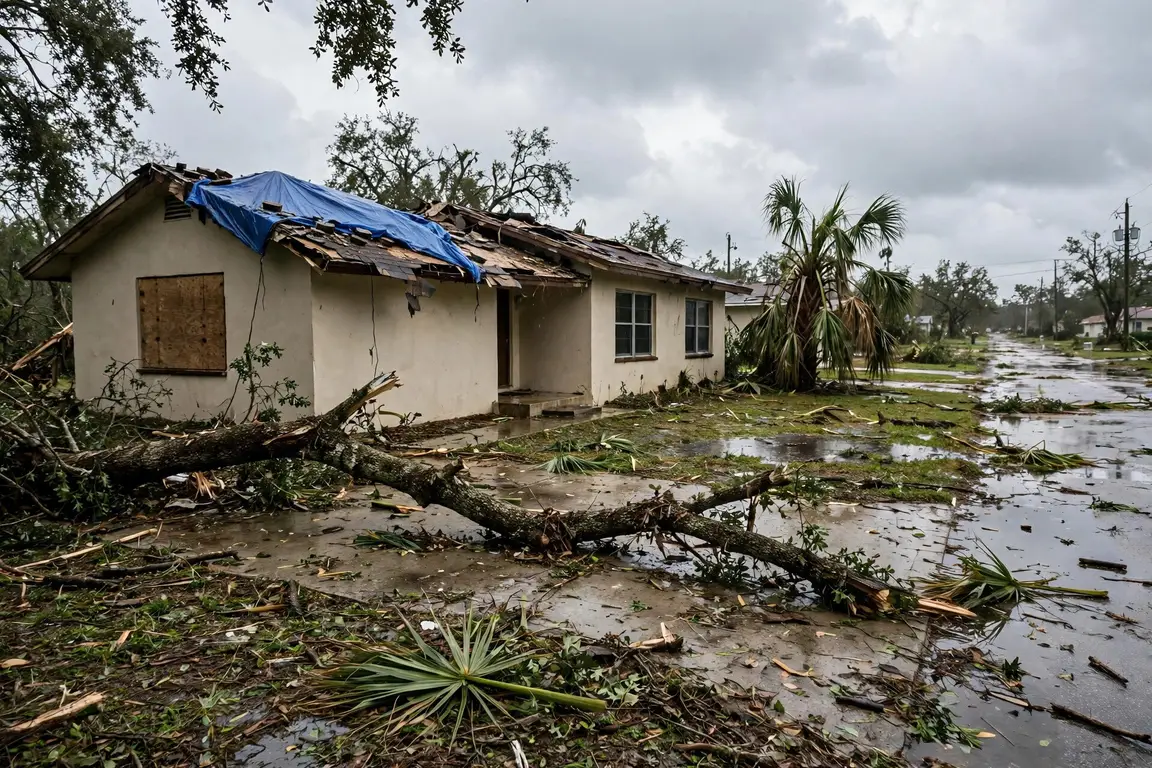

The storm is gone, the water is down, and now you are standing in your own yard looking at a tarp, a tree limb, and a roof you are not sure you can afford to fix. Every Jacksonville homeowner in that spot asks me the same question, usually within the first minute: do I have to repair all of this before I can sell the house?
The short answer is no. The longer answer is this article. Before you spend a dime on repairs, there are a few things to do in the right order, because the order decides how much of the bill lands on you and how much of it never has to exist. I buy houses in Northeast Florida, and I have done it for 13 years, across more than 300 transactions. Storm work is a big part of that, because in this city the question is never if a storm season tests your roof. It is when. Hurricane season runs June 1 through November 30, and a house here only has to lose the argument once.
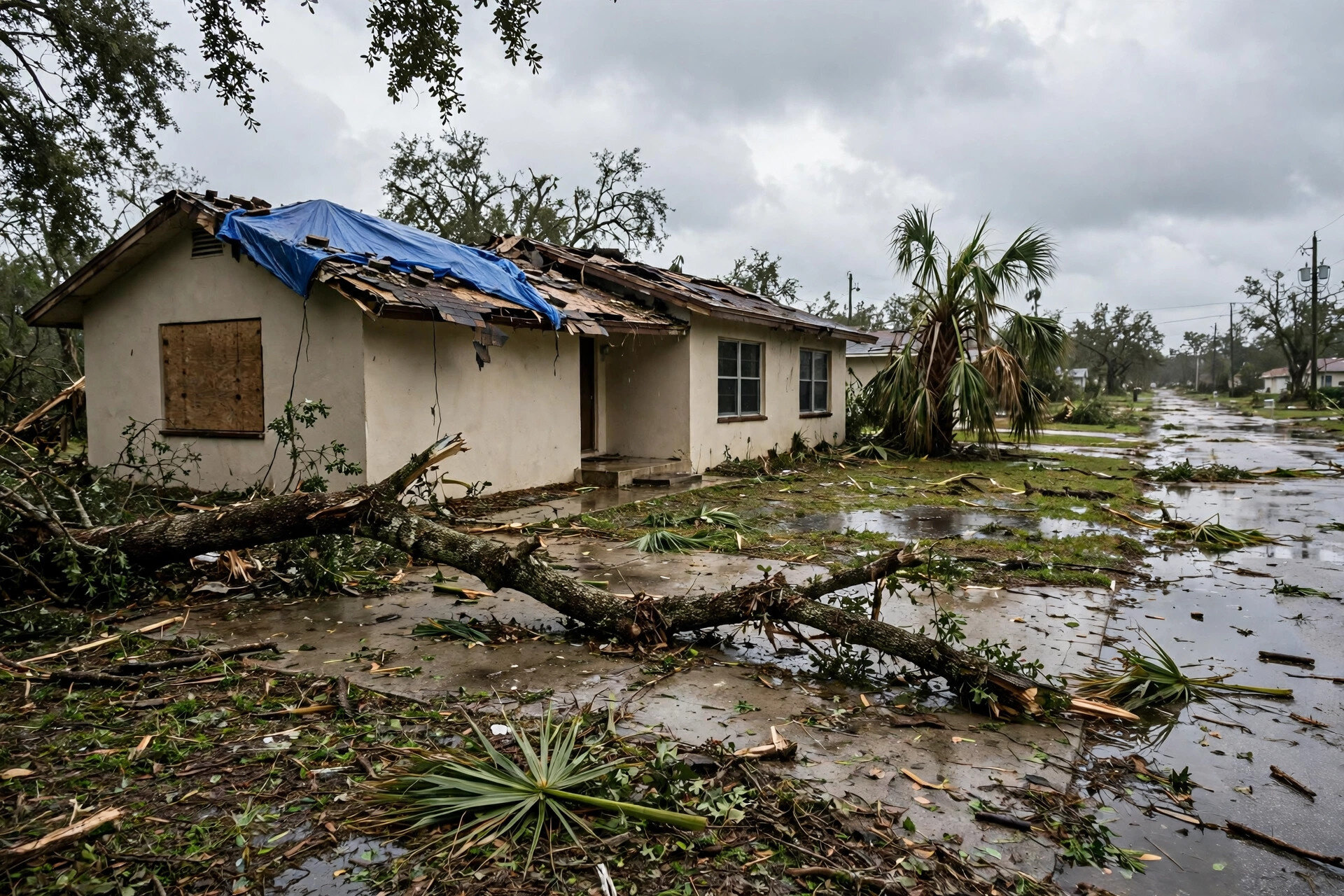
The First Days: Safety, Photos, and Paper
Before any decision about selling or repairing, do these three things.
Make it safe and dry. If the roof is open, get it tarped. Water coming in does more damage in a week than the storm did in a night, and every insurance policy expects you to prevent further damage where you safely can. Keep the receipt for the tarp and any emergency work. Emergency mitigation is the one repair bill I tell people to pay without waiting.
Photograph everything before you touch it. Every room, every stain, every piece of debris, the roof from the ground, the yard, the fence. Take more photos than feels reasonable. The condition of the house on day one is the foundation of your insurance claim and, if you sell as-is, the foundation of an honest conversation about what the house needs. Photos taken before cleanup are worth money. Photos taken after are an argument.
Start a folder. Policy documents, the claim number once you file, every adjuster visit, every contractor quote, every receipt. Selling, repairing, or fighting the claim all run on the same folder. The homeowner who has it organized decides from facts. The homeowner who does not decides from stress.
What Your Insurance Company Actually Decides
Most sellers assume the insurance check settles the question. It rarely does, and it helps to understand what the claim actually is before you plan around it.
The adjuster’s number is an estimate of what the covered damage costs to repair, minus your deductible. In Florida, hurricane damage usually falls under a separate hurricane deductible that is a percentage of the home’s insured value rather than a flat dollar amount, which surprises people the first time they see it. Two more things matter. First, a claim pays for covered damage, not for the roof’s age, the soft spots that were already there, or the updates the house needed before the storm. Second, getting the full amount often takes more than one round, and part of the money is commonly held back until the work is actually done and documented.
Here is the practical translation: the insurance number and the repair number are two different numbers, and the gap between them is yours. If the gap is small and you love the house, repair it. If the gap is large, or the house already needed work the storm just made urgent, the math changes, and that is the moment this decision gets made in most of the storm sales I handle.
One caution I give every seller: do not assign your claim away in the first emotional week, and do not sign a repair contract under pressure from anyone who knocked on your door. The first week after a storm is when the worst paperwork decisions get made in this city.
The Repair Path, Honestly
Repairing is the right answer for plenty of people, and I would rather tell you that than talk you out of a house you want to keep. Just walk in with your eyes open about what the path actually involves after a storm.
Every contractor in Jacksonville is booked after a storm, and the good ones are booked longest. Roofers triage. Permit offices back up. Materials move slower. A repair that takes six weeks in March can take six months in October, and during those months you are paying the mortgage, the taxes, the insurance, and the utilities on a house you may not be able to live in. If the damage is structural, read my walkthrough on selling a house with foundation problems in Jacksonville before you assume the visible damage is the whole list, because storm water finds the weak parts of a house that were already there.
There is also the question nobody asks until it is too late: what does the house look like to the next buyer or the next insurance company after the repair? A repaired storm house sells, but it sells with a story attached, and a roof of a certain age in Florida can be hard to insure no matter how well it was patched. None of that makes repair wrong. It makes it a decision to price fully before you start, not after.
The Sell-As-Is Path, Honestly
Selling as-is means the house changes hands in its current condition, damage and all, and the repair becomes the buyer’s project and the buyer’s risk. No contractor schedule. No permit queue. No months of carrying a house you cannot live in, which is the quiet cost in every one of these decisions; I break that carrying math down in my guide to selling a vacant house in Jacksonville, and a storm house you have moved out of is a vacant house with a bigger repair list.
What an as-is sale does not mean is giving the house away. It means the price reflects the damage honestly, in writing, with the reasoning shown. Which brings up the part sellers actually call me about.
How I Price a Storm Damaged House
The sequence is the same one I use on every purchase, and you are entitled to see every step of it.
The repaired value comes first. I look at what the house would be worth repaired, from recent comparable sales near it. That is the ceiling.
Then the damage gets priced as a scope, not a guess. Roof, water intrusion, electrical, drywall, floors, whatever the storm touched, priced with the local contractor numbers I will actually pay if I buy it. Your photo folder and any adjuster paperwork you choose to share make this step faster and more accurate, which is one more reason to build that folder.
Then the holding picture. Taxes, insurance, utilities, and the cost and risk of the repair itself come off the value, along with a fair margin. What is left is the offer, in writing, with the math available for you to question line by line. If you want the full formula with a worked example before you ever call, it is published on my sell my house fast in Jacksonville page, along with the rest of my process.
Two things I will never do in a storm deal: pressure you before your claim is understood, or pretend the insurance side does not exist. If your claim is still open, say so. The paperwork can be structured so the house sells and the claim is handled cleanly, and the time to sort that out is before signing, not after. If you are comparing buyer types while you decide, my side-by-side on the best cash home buyers in Jacksonville shows how the fee column differs from one buyer to the next.
FAQs
Can I sell my house while my insurance claim is still open?
Yes, in most cases. The house and the claim are two separate things, and the sale paperwork can address the claim directly so nothing is left ambiguous. What matters is that the claim status is on the table before signing, so the agreement reflects reality instead of discovering it later.
Do I need to remove the tree and debris before selling?
No. Safety hazards on your own property are worth handling if someone could get hurt, and emergency tarping protects the house, but a full cleanup is not a condition of an as-is sale. Debris, damaged fencing, and storm mess are part of the scope I price. They are not homework you have to finish first.
Will a buyer make me fix the roof because of insurance?
A financed buyer usually cannot close on a storm damaged roof, because their lender and insurer will not allow it. That is the practical wall most storm sellers hit on the open market. A cash purchase has no lender in it, which is why the as-is route exists for exactly this situation.
What if the storm damage is mostly cosmetic?
Then the honest answer might be to fix it and list. Paint, fencing, and yard damage are a weekend and a modest bill, and I will tell you that on the call if that is what the photos show. The as-is route earns its keep when the damage is structural, expensive, or stacked on top of repairs the house already needed.
How fast can a storm damaged house close?
When the title work is clean, in as little as 10 to 12 days from the agreement. Storm damage itself does not slow a cash closing down. What sets the pace is title and paperwork, the same as any other sale.
Before You Spend a Dime, Get the Whole Picture
You have three real options after a storm: repair and stay, repair and sell, or sell as-is and let the damage be somebody else’s project. Each one is right for somebody. The mistake is choosing the expensive one by default because it was the first one you thought of.
Call me at (904) 867-8673 and walk me through what the storm did. Send the photos if you have them. I will give you a written number with the reasoning behind it, and if the repair path is honestly better for you, you will hear that from me too. No fees, no commissions, and the standard closing costs on my purchases are covered by me. Synergy Redevelopers LLC, 12574 Flagler Center Blvd, Suite 101, Jacksonville. The decision stays yours. It just gets easier with real numbers on the table.