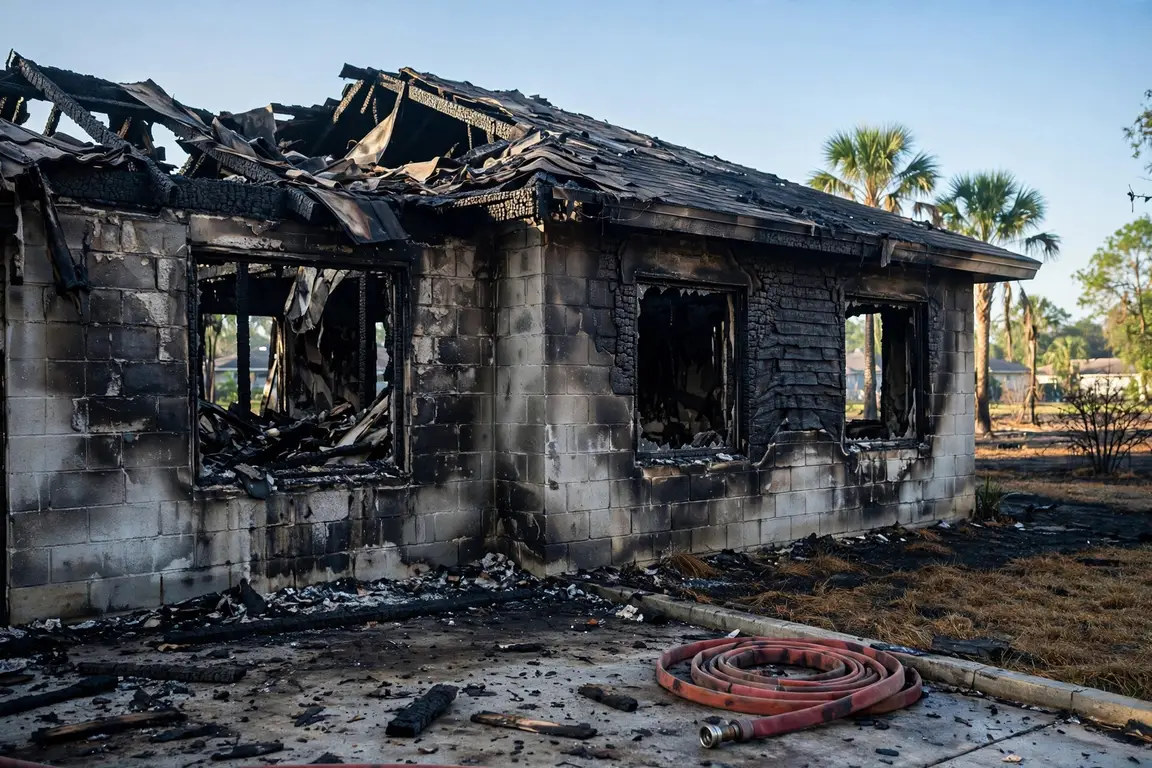

A house fire scrambles everything at once. You are dealing with somewhere to sleep, belongings that smell like smoke three rooms away from the burn, an insurance claim, and a building you are not sure you are even allowed to enter. And underneath all of it sits the decision nobody warns you about: what happens to the property itself.
I buy houses in Northeast Florida, and I have done it for 13 years, across more than 300 transactions. Fire houses are a small, steady part of that work, and I have learned that the owners who come out of it best are the ones who separate the decisions instead of letting them blur together. The insurance claim is one decision. The cleanup is another. Whether to rebuild or sell is the third, and it does not have to be made in the first terrible week. This article walks through all three, in the order they actually arrive.
The First Week: Safety, Security, and Documentation
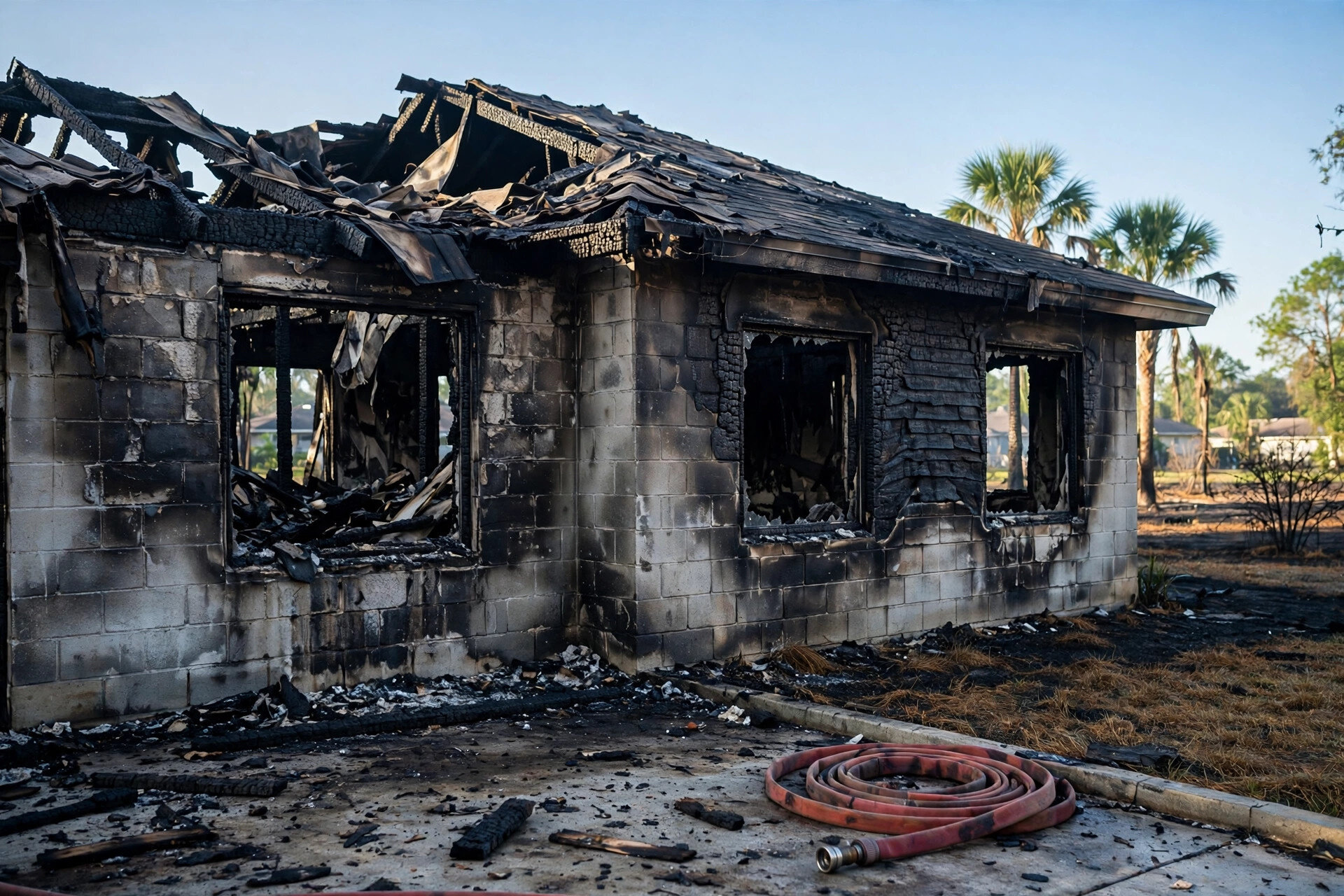
Before any talk of selling or rebuilding, there are things that only get harder if they wait.
Do not re-enter until the fire department clears it. A burned structure can be unstable in ways that do not show from the street, and smoke and soot are not just a smell; they are a health exposure. This is not a formality.
Secure the property. Once the scene is released, the house needs to be boarded and the property made as safe as it can be. An open, burned house attracts exactly the wrong attention, and an unsecured property can become a liability problem on top of everything else. Your insurer typically expects reasonable steps to prevent further loss, and emergency securing and mitigation are the repair bills I tell people to pay without waiting, same as after a storm.
Document before anything gets moved. Photograph and video every room, every wall, the roof from the ground, and the contents as they sit, before cleanup crews or family members start hauling things out. The state of the house in the first days is the backbone of the insurance claim, and it is also what makes an honest as-is conversation possible later. After that, start the folder: the fire report, the claim number, every adjuster visit, every quote. Fire paperwork multiplies fast, and the folder is what keeps it from multiplying in a kitchen drawer.
The Insurance Decision Underneath Everything
For most fire houses, the insurance claim is the largest moving part, and it is worth understanding its shape before you decide the property’s future.
A claim on a fire damaged house generally separates into pieces: the structure, the contents, and the additional living expenses while you cannot live there. The structure piece is the one that matters for this article, and it works like other property claims: the insurer estimates the covered damage, the deductible comes out, and part of the money is commonly held back until repairs are actually completed and documented. That last detail matters more than people realize. If you are not going to rebuild, the held-back portion may never be released, which means the real choice is sometimes between a smaller settlement now with no rebuild, and a larger theoretical number attached to a year of construction. Neither answer is automatically right. But you should make the decision knowing that is the shape of it.
Two cautions I give every fire seller. First, do not let anybody rush you into signing the claim over or into a full rebuild contract in the first emotional weeks; that is when the worst paperwork in this business gets signed. Second, understand that the claim and the house are separable. In many cases the property can be sold while the claim is sorted out, as long as the paperwork addresses the claim clearly and nobody pretends it does not exist. That conversation belongs before a contract, with the insurer’s position understood, not discovered after one.
The Cleanup and Rebuild Path, Honestly
Some fire houses should absolutely be rebuilt. A contained kitchen fire in a solid house, with good insurance and a family that wants to stay, is a renovation story, not a sale story, and I will tell you that on the phone if that is what your photos show.
The honest version of the bigger fires looks different. A serious structural fire means engineering assessments, permits, possible partial or full demolition of the damaged sections, hazardous material handling for soot and debris, and a rebuild measured in seasons, not weeks, while you pay for somewhere else to live. Burned houses also carry damage you cannot see in the first walkthrough: heat and water damage travel well beyond the room that burned, and the firefighting water does its own quiet work on framing, flooring, and electrical systems. Contractors who do fire restoration are specialists, they are in demand, and their calendars look like it.
And then there is the market reality on the other side of a rebuild: a house with a fire in its history sells with that history disclosed, which narrows the buyer pool and invites a discount even when the renovation is beautiful. None of this makes rebuilding wrong. It makes it a decision to enter with the full picture and the settlement math in front of you, not a default you drift into because the adjuster used the word repair.
If the damage is smaller and you are leaning toward fixing and listing instead, my walkthrough on selling a house as-is in Jacksonville lays out the as-is versus repaired comparison in general terms, and the fire version of that math is the same math with higher stakes.
The Sell-As-Is Path, Honestly
Selling a fire damaged house as-is means exactly what it sounds like: the house changes hands in its current condition, burned sections, smoke damage, contents and all, and the cleanup, demolition, and rebuild become the buyer’s project, the buyer’s permits, and the buyer’s risk.
What that buys you is an ending. No restoration contractor calendar. No year of living somewhere else while paying for two households. No construction surprises discovered one wall at a time. The city and code side of a burned structure, securing requirements and any demolition permits, transfers to a buyer who does that work routinely. And it buys you the ability to make the insurance decision separately and calmly, based on the settlement you can actually collect rather than the rebuild you feel obligated to attempt.
What it does not mean is that the house has no value. A fire damaged house on a Jacksonville lot has real value: the land, the structure that survives, and the rebuild potential are all worth something to the right buyer. The price simply has to reflect the damage honestly, with the reasoning shown. That is the part I can put in front of you in writing.
How I Price a Fire Damaged House
The sequence matches every other purchase I make, adjusted for the reality of a burn.
The repaired value comes first, from comparable sales of similar houses near yours in repaired condition. That is the ceiling everything is measured against.
Then the damage gets priced as a scope. What burned, what the heat and water reached, what has to come out before anything can be rebuilt, and what a permitted demolition of the destroyed sections costs. I price that with the local numbers I will actually pay if I buy the house, and your documentation, the fire report, the adjuster’s summary if you choose to share it, makes this step faster and fairer.
Then the holding picture. Taxes, insurance, utilities, and the real risk of a long restoration come off the value, along with a fair margin. What is left is a written offer, and I will walk through any part of it. The full formula, with a worked example, is published on my sell my house fast in Jacksonville page if you want to check my method before you ever call. There are no fees and no commissions from me, and the standard closing costs on my purchases are covered by me. If you are comparing buyer types in the middle of all this, the side-by-side on the best cash home buyers in Jacksonville is the page I point people to, because the fee differences matter most when everything else is already hard.
One thing I will never do on a fire house: pressure you to decide while the claim is a fog. If the right move is to let the insurance picture clear first, I will say so, and the conversation can pick up when you can see the whole board.
FAQs
Can I sell a fire damaged house before my insurance claim settles?
In many cases, yes. The house and the claim are separable, and the sale paperwork can address the claim directly so nothing is ambiguous. What matters is that the claim’s status is understood and on the table before signing. Every fire claim has its own posture, so this is a conversation to have with the specifics in front of us, not a blanket promise in either direction.
Do I have to clean out the burned contents before selling?
No. Contents removal, debris, and cleanup are part of the scope I price on an as-is purchase. If there are belongings you want to recover once the property is cleared for entry, take them, with the fire department’s and your insurer’s documentation needs in mind. The rest is not homework standing between you and a sale.
The city is sending notices about the property. Does that stop a sale?
Notices about securing or cleaning up a damaged property are common after a fire, and they are one of the reasons owners decide not to hold a burned house through a long rebuild. They do not stop a sale; they transfer with the property to a buyer whose business is resolving them. What they should do is speed up your decision, because they do not pause while you think.
What if only part of the house burned?
Then the analysis is genuinely different, and so might my advice be. A contained fire with a strong structure and a solid settlement can be a repair story with a good ending. The scope question, what the heat, smoke, and water actually reached, decides it, and that is what a walkthrough is for. You will get my honest read either way, including if the read is that you should fix it and stay.
How fast can a fire damaged house close?
The damage itself does not set the pace; title and paperwork do. When the title work is clean, a closing can happen in as little as 10 to 12 days from the agreement, the same as any other purchase I make. Insurance paperwork runs on its own clock beside the sale, not in front of it.
One Decision at a Time, in the Right Order
You do not have to solve the whole fire at once. Document it. Understand what the claim can actually pay. Then decide the property question with real numbers instead of obligations: rebuild it because you want that house back, or sell it as-is and let the restoration be somebody else’s year.
Call me at (904) 867-8673 when you are ready for the second conversation. Send photos if you have them, tell me where the claim stands, and I will give you a written number with the reasoning behind it. If rebuilding is honestly the better road for you, you will hear that from me too. Synergy Redevelopers LLC, 12574 Flagler Center Blvd, Suite 101, Jacksonville. No pressure, no obligation, and no deadline I invent for you.