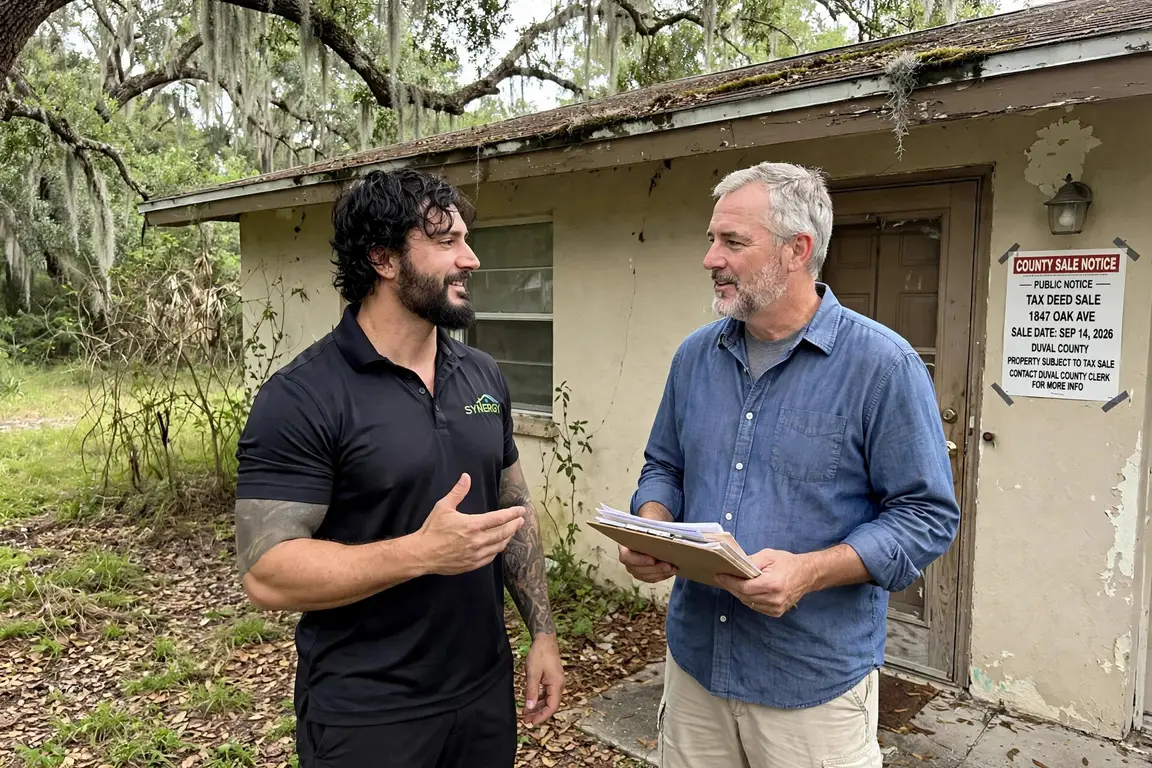

Most owners I meet in a forced sale learned the sale date before they learned their options. The letter arrives from the clerk, the court, or the lender, and it reads like the ending. In Florida it usually is not the ending. It is the start of a clock, and what you can still do depends on how much of that clock is left.
I buy houses in Northeast Florida, and I have done it for 13 years, across more than 300 transactions. A good share of those houses came to me because a court, a lender, or the county had set a date the owner could not move. Here is what I would want to know if the letter had my name on it.
What a Forced Sale Actually Means
A forced sale is any sale where the timing belongs to someone else. Sometimes a judge orders it outright. Sometimes nobody has ordered anything yet, but a debt, a tax bill, or a family standoff has narrowed your choices until selling is the only move left that protects your equity.
The distinction that matters is who holds the pen. In a normal sale, you pick the price, the buyer, and the closing date. In a forced sale, the court or the creditor picks the date first, and everything after that is a negotiation with a deadline. Owners who treat the first letter as junk mail tend to lose the house at auction for less than it was worth.
The Five Ways a House Gets Forced
Foreclosure
Florida foreclosure runs through the courts. Your lender has to sue you, and federal rules generally bar the servicer from making that first court filing until your loan is more than 120 days delinquent. That window is the cheapest time you will ever get in this process, because nothing has been filed, no sale date exists, and a regular sale is still on the table.
Once the case ends in a judgment against you, the end moves fast. Under Florida Statute 45.031, the court directs the clerk to sell the property at public auction on a day that is not less than 20 and not more than 35 days after the judgment. Florida gives you no redemption period after a foreclosure sale. When the gavel falls and the certificate of sale issues, the house belongs to the buyer.
Unpaid property taxes
The tax version moves slower, then all at once. Florida property taxes become delinquent on April 1. The county sells a tax certificate on the debt, usually by June 1, and an investor buys the right to collect from you with interest. Two years have to pass from April 1 of the certificate year before that investor can apply for a tax deed and start the sale process. A certificate dies on its own after seven years if nobody acts on it.
You can pay the taxes, the interest, and the costs at any point before the clerk issues the tax deed to the winning bidder, and the whole thing stops. The sheriff’s office gives the legal owner notice at least 20 days before the sale. When that notice shows up, paying or selling before the auction is the only move left. A tax problem is a loan you did not agree to, growing on a schedule you do not control.
Probate fights and heirs who cannot agree
When an owner dies, the house does not pass to the family with a bow on it. If the property sat in the owner’s name alone, Florida probate has to open and the court has to appoint a personal representative before anyone has legal authority to sell it. Heirs cannot sign a valid contract on their own while that is pending.
The trouble starts when heirs inherit together and disagree. One sibling wants to sell, one wants to keep the house, one lives in it and pays nothing. Florida law gives any co-owner an exit: a partition action under Chapter 64. The court first asks whether the property can be physically divided. A single-family house almost never can, so the court orders it sold and splits the money by ownership share. Since 2020, Florida’s version of the Uniform Partition of Heirs Property Act adds protection for inherited family property: an independent appraisal, a chance for the other heirs to buy out the one who filed, and a preference for an open-market sale over an auction. It works, but it takes months and costs legal fees on every side.
I bought a probate house in St. Johns County where the owner had let family members stay before she passed. After her death they simply stayed, no lease, no paperwork. The actual heirs were scattered: one in jail, three sisters in other states, nobody local, and none of them willing to evict their own relatives. The house sat while its equity leaked away to damage and delay. I bought it with the occupants in it and took the eviction on myself. That family lost money to distance and grief. No court ordered anything; it was a forced sale in everything but name.
Divorce
In a Florida divorce, the judge divides marital property under equitable distribution, and ordering the house sold and the proceeds split is a standard outcome. Neither spouse can sell the house out from under the other while the case is open, and a judge’s deadline carries contempt behind it.
Judgment liens
A judgment lien is quieter than the others. When someone wins a money judgment against you in Florida and records it with the clerk, it becomes a lien on your real property in that county for 10 years. The creditor can extend it once, by recording it again before it expires, and no judgment lien can outlive 20 years from the date the judgment was entered. The lien puts no date on a calendar by itself. What it does is block you: most buyers, lenders, and title companies will not close a sale or a refinance until the lien is paid or settled, so the debt gets collected at your closing table whether you planned for it or not.
Two limits are worth knowing. Florida’s homestead protection keeps most ordinary judgment liens from attaching to the home you actually live in, though tax liens, mortgages, and construction liens play by different rules. And a creditor can levy on non-homestead property and force a sheriff’s sale. A lien you ignore tends to meet you at the worst possible moment, mid-sale, with a buyer waiting.
Notice the pattern across all five: the most room at the beginning, almost none at the end. Months of runway before a foreclosure filing, years before a tax deed sale, then endings measured in weeks or days. The owners who call me with options are the ones who called early.
Your Options Before the Sale Happens
Pay what is owed and stop it. Taxes can be paid in full right up until the tax deed is issued. A foreclosure judgment can be paid before the sale. This is the cleanest ending when the money exists.
Sell the house yourself, on your timeline instead of theirs. If the sale date is months out and the house is in decent shape, a listed sale may bring the most money. If the date is close, the house needs work, or you have occupants, title problems, or out-of-state heirs, a direct cash sale is built for exactly that squeeze. Either way, the debt gets paid at closing out of the proceeds, and you keep the equity that is left.
Negotiate with the party forcing it. Loan modifications, forbearance, and short sales exist on the mortgage side. Creditors holding judgments settle for less than face value more often than owners expect, because a settlement today beats a lien that may never pay. Heirs fighting over a house can sign a buyout agreement and skip the partition case. All of them go better before a sale date is set.
Talk to an attorney about bankruptcy if the date is days away. A bankruptcy filing triggers an automatic stay that pauses most foreclosure and tax sale activity while the case is open. It is a serious step with real costs, and it is a lawyer conversation, not a buyer conversation. Some owners never hear the option exists until after the auction.
Do nothing is also a choice, and it is the worst one on this list. The auction runs without you, at whatever price the room produces. If the sale does not cover the mortgage debt, the lender can come after you for the difference.
Where a Cash Sale Fits, Honestly
A cash buyer cannot undo a sale that already happened, and anyone who tells you otherwise is selling you something. What a cash sale can do is beat the date. I can close in days rather than months, buy the house in the condition it sits in, take it with occupants in place, and work around the probate and title problems that sink listed sales. When the alternative is an auction, speed is the whole value.
Here is the part most buyers skip: a cash offer will be lower than a retail price. It has to be, since the buyer takes the repairs, the risk, and the holding costs. If you have six months and a house in good shape, listing with an agent may well put more money in your hand, and I will tell you that at your kitchen table. If you have 30 days and a house that needs a roof, the math changes, and the highest retail offer in the world does you no good if it cannot close before the auction.
Run me through the same test as anyone else. My company is Synergy Redevelopers LLC, registered in Florida, and my office is at 12574 Flagler Center Blvd, Suite 101, Jacksonville. Ask for proof of funds. Take the contract home and read it. A forced sale already took your timeline away. Do not let a buyer take your judgment too.
FAQs
Can I sell my house after a foreclosure sale date is set?
Yes, as long as the closing happens before the sale. The judgment sets the auction 20 to 35 days out, and a sale that pays off the mortgage debt before that date ends the foreclosure. The tighter the date, the more closing speed matters.
What happens to my equity if the house sells at auction?
Sale proceeds pay the debt and the costs of sale first. Anything left over is surplus, claimable by the former owner from the clerk of court. Surplus is not automatic, though: you have to file the claim, and lienholders get paid in order before you do.
Can one heir force the sale of an inherited house in Florida?
Yes. Any co-owner can file a partition action under Chapter 64 of the Florida Statutes. If the property counts as heirs property, the court must first get an appraisal and give the other co-owners a chance to buy out the filer at that value. If nobody buys, the court orders a sale and divides the money. Most families who understand this settle it themselves, because a voluntary sale almost always nets more than a court-run one.
How long do I have if I stop paying my property taxes?
Longer than most people fear, and shorter than most people assume. Taxes go delinquent April 1, the county sells a tax certificate by about June 1, and the certificate holder cannot apply for a tax deed until two years have passed from April 1 of the year the certificate was issued. You can pay everything owed, with interest, any time before the clerk issues the tax deed, and stop the process cold.
If a Sale Date Is Already on Paper
Do three things this week. First, find the actual date and count the days you have, not the days you wish you had. Second, call a Florida real estate attorney, because some of your options are legal ones and they expire. Third, get at least one real offer in writing while you still have time to compare it against your other routes.
If you want that offer from a local buyer you can check out first, reach me through https://synergybuyshousesjacksonville.com/ or at (904) 867-8673. I will walk the house, put a number in writing, and leave the contract with you to read. The court may own the deadline. The decision is still yours.